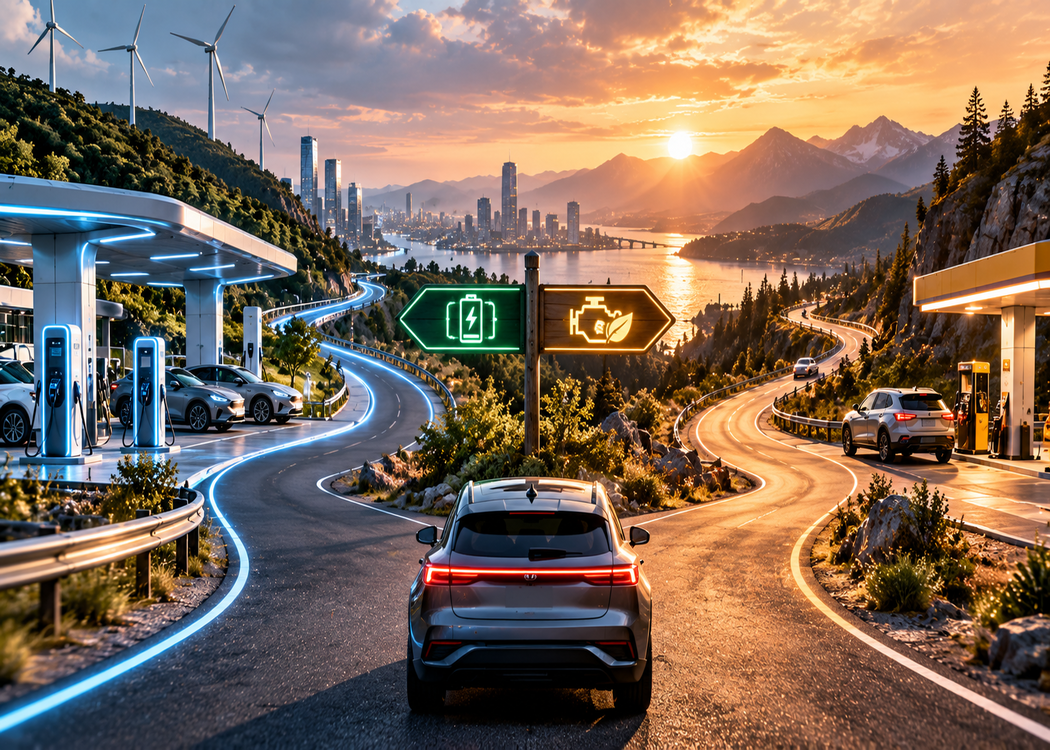
The automotive industry’s transition toward electrification is becoming more complicated than the simple prediction that battery-electric vehicles would rapidly replace combustion engines.
Battery-electric vehicles continue to expand globally, but adoption rates differ substantially by country, income level and access to charging infrastructure. Some consumers remain concerned about purchase prices, charging availability, apartment living, long-distance travel and resale values.
These concerns have helped strengthen interest in hybrid and plug-in hybrid vehicles.
Hybrids provide some benefits of electrification while retaining a combustion engine. Drivers can reduce fuel consumption without depending entirely on public charging infrastructure, making the technology particularly attractive in markets where charging networks remain uneven.
This has encouraged several automakers to maintain broader powertrain portfolios rather than committing exclusively to one technology on a single timeline.
Toyota is frequently associated with this diversified approach because it continued investing heavily in hybrids while simultaneously developing battery-electric, plug-in hybrid and hydrogen technologies.
The broader strategic lesson is not necessarily that hybrids will defeat EVs. Battery-electric vehicles continue to improve and remain central to long-term automotive investment.
Instead, the market demonstrates that technology transitions rarely occur at identical speeds everywhere.
Automakers must balance future regulatory requirements with current consumer demand while making enormously expensive decisions about factories, batteries and supply chains.
The companies best positioned for the transition may therefore be those capable of adjusting production as consumer preferences evolve rather than depending entirely on one forecast of how quickly electrification will occur.