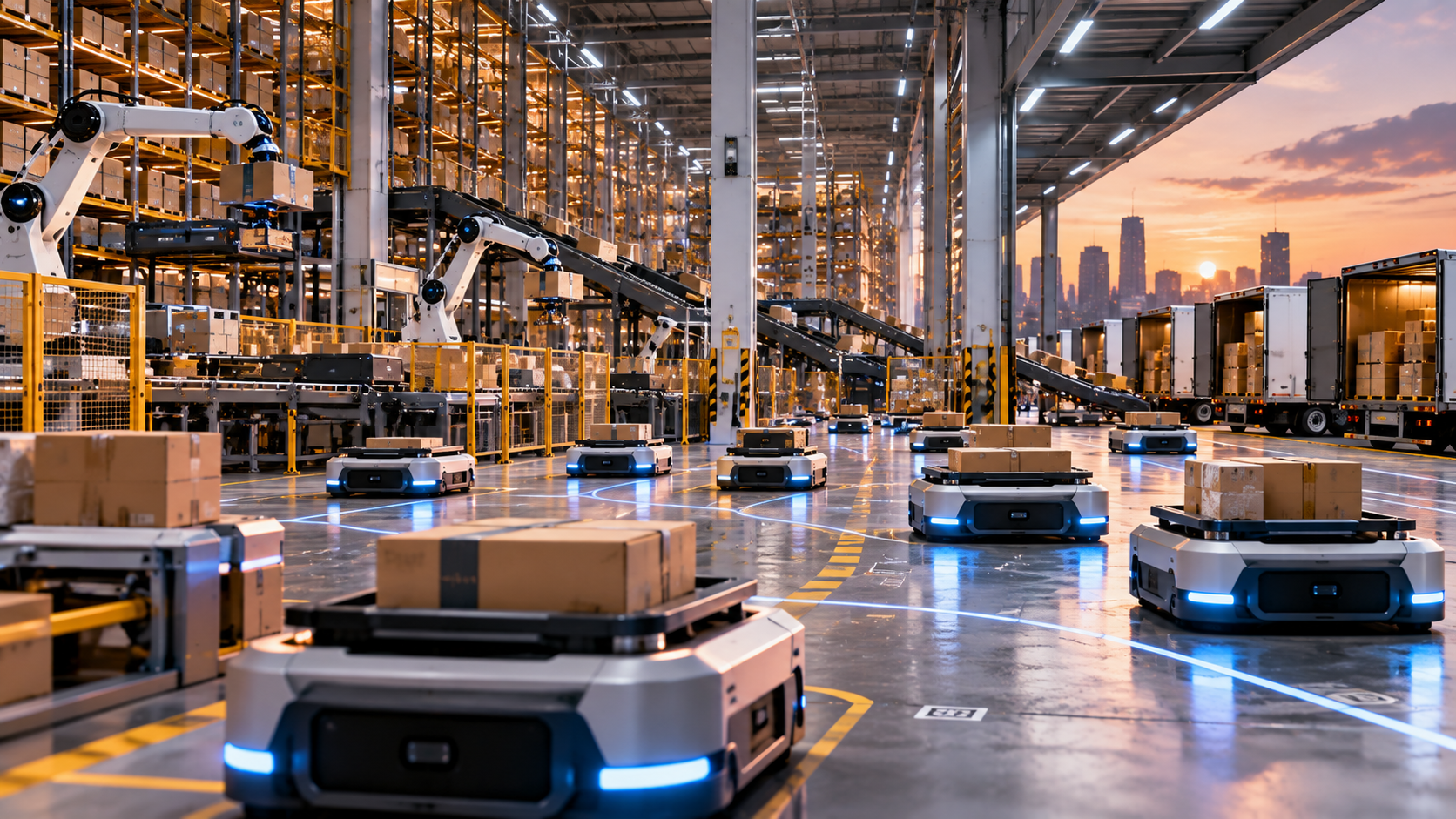
Modern fulfillment centers are becoming some of the most sophisticated robotic environments in commercial operation.
Amazon has spent years deploying robotic systems across its logistics network, initially using machines that moved shelving units through areas largely separated from human workers.
A newer generation of systems, including Proteus, represents an important change.
Proteus was designed as Amazon’s first fully autonomous mobile robot capable of moving through certain warehouse environments while operating around employees. Using sensors, navigation technology and computer vision, the robot can identify obstacles and adjust its movement dynamically.
That flexibility matters because warehouses are not perfectly predictable environments.
Workers move through aisles, carts change positions and packages constantly enter and leave the system. Traditional industrial robots often depend on carefully controlled environments or physical barriers separating machines from people.
More capable autonomous mobile robots can potentially operate with greater flexibility.
The economic motivation is substantial. E-commerce profitability depends heavily on logistics efficiency. Small improvements in the time required to locate, move, sort and pack products can become significant when multiplied across millions of orders.
Automation can also shift workers away from repetitive transportation tasks toward activities requiring more dexterity, problem solving or oversight.
The long-term destination could be increasingly automated fulfillment centers where inventory moves continuously between robotic storage systems, autonomous vehicles and automated sorting equipment.
That does not necessarily mean warehouses without people. Instead, logistics facilities are becoming mixed human-machine environments, where software determines routes, robots perform more physical movement and employees supervise increasingly automated processes.