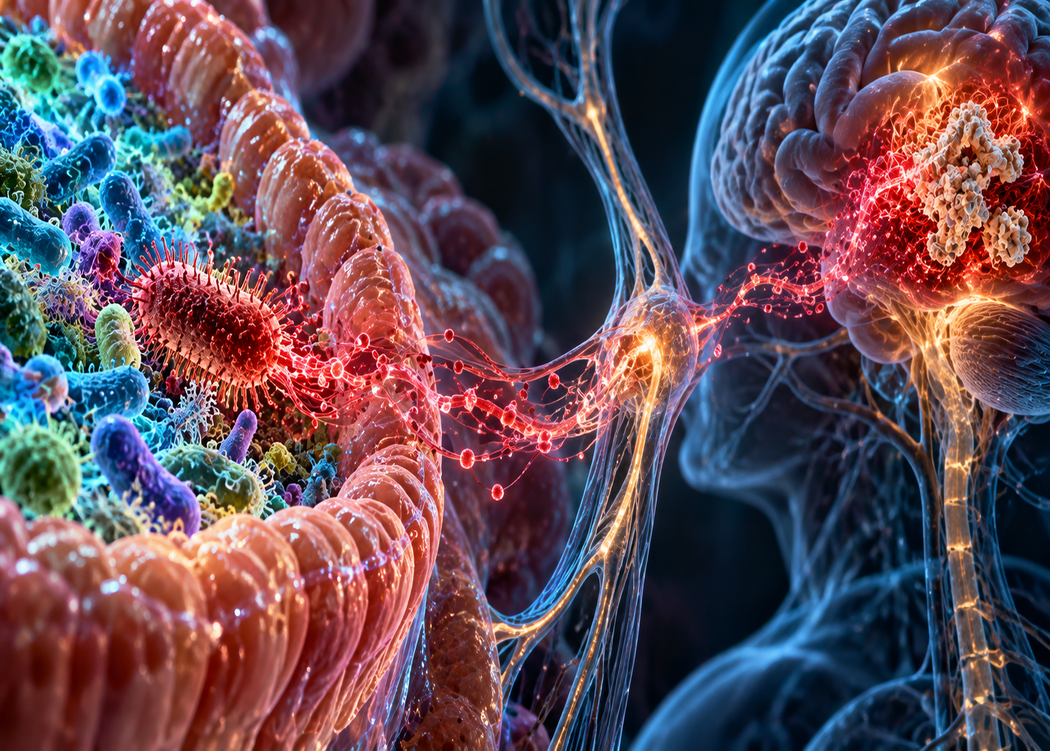
Scientists investigating Parkinson’s disease are uncovering increasingly important connections between the digestive system and the brain. Research from the California Institute of Technology (Caltech) has shown that gut microorganisms can influence movement-related symptoms and neuroinflammation in experimental models of Parkinson’s disease. The findings have strengthened interest in the gut–brain axis, a complex communication network connecting intestinal microbes, the immune system and the nervous system.
One of the central features of Parkinson’s disease is the abnormal accumulation of a protein called alpha-synuclein. Under certain conditions, this protein can misfold and aggregate, forming structures associated with neuronal dysfunction. Researchers are investigating whether microbial products, inflammation and changes in intestinal function might contribute to these processes. Some experimental findings suggest that signals originating in the gut can influence neurological pathways involved in the disease.
The implications could be significant, but important questions remain unresolved. Much of the mechanistic evidence comes from animal models, and scientists have not established that a single bacterial species or molecule directly causes Parkinson’s disease in humans. Parkinson’s is a complex condition influenced by multiple genetic, environmental and biological factors. The relationship between gut microbial changes and disease progression may also work in both directions.
Nevertheless, microbiome research could open new approaches to understanding and eventually managing Parkinson’s disease. Scientists are investigating whether microbial patterns might help identify individuals at elevated risk, reveal new biological targets or support treatments that modify gut-related pathways. Although microbiome-based therapies are not yet established treatments for Parkinson’s, the research is expanding the search for answers beyond the brain itself.
Sources for your webpage: