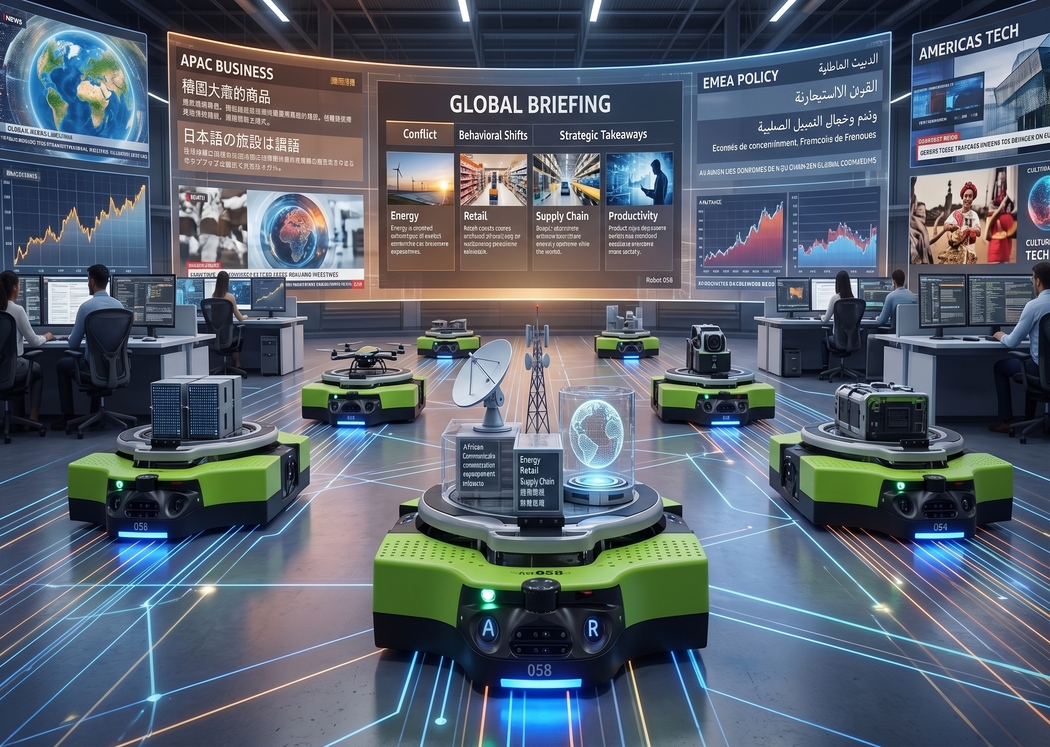
Amazon’s warehouses are steadily evolving from facilities containing isolated robots into environments where autonomous machines can work much more closely alongside people.
Proteus is central to that transition.
Amazon describes Proteus as its first fully autonomous mobile robot. Unlike older warehouse robots that operate inside restricted robotic zones, Proteus uses perception, mapping and navigation technology to move through open areas while detecting and avoiding people and obstacles.
The original system focused heavily on transporting large wheeled carts around outbound areas of fulfillment centers.
Amazon has now introduced a next-generation Proteus designed to operate across a much wider portion of its logistics facilities. Employees can assign tasks using ordinary conversational instructions rather than specialized programming commands. Amazon says the system can determine the appropriate priority, route and timing itself.
The economics behind this development are straightforward.
E-commerce profitability depends heavily on the cost and speed of moving inventory. Every unnecessary walk, manual cart movement and delay becomes meaningful when multiplied across millions of packages.
Autonomous robots can absorb some of that repetitive transportation work while allowing employees to concentrate on inventory management, quality control and tasks requiring greater judgment or dexterity.
However, the term “lights-out logistics” should still be viewed as a long-term direction rather than a description of today’s warehouses. Amazon continues to employ large human workforces and says its European robotics expansion will accompany additional hiring.
The more immediate transformation is toward warehouses where humans, robots and AI-driven routing systems operate together continuously.