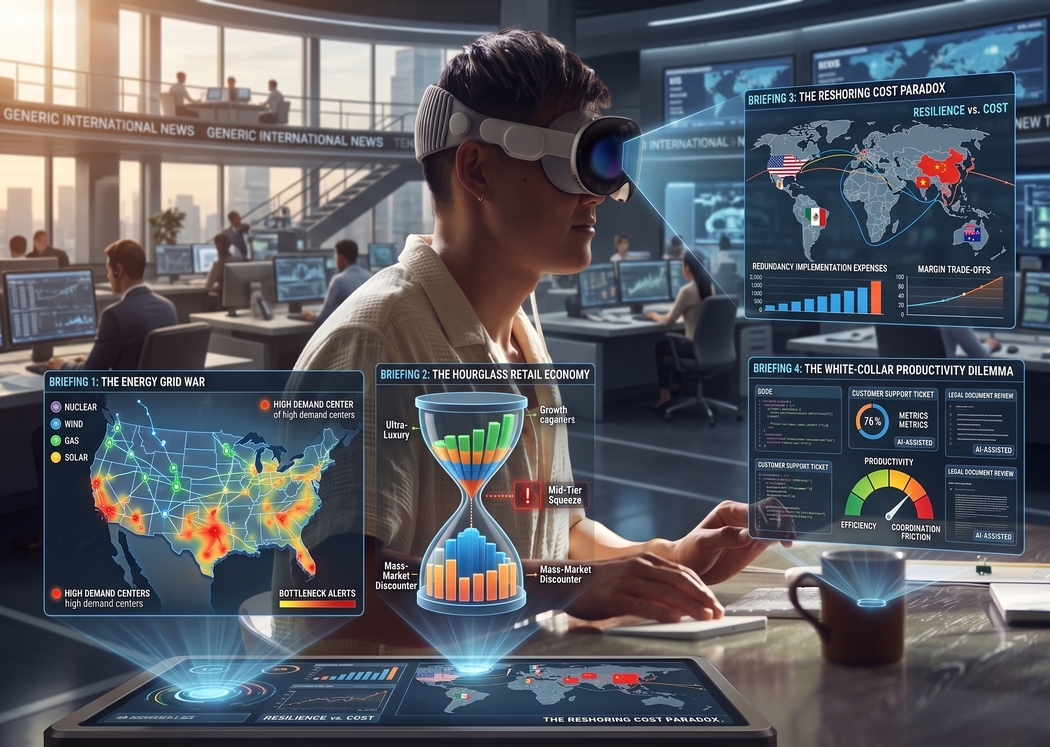
Apple Vision Pro has not turned spatial computing into a universal consumer habit, but enterprise applications may provide a different route for the technology to establish practical value.
Spatial computing becomes particularly useful when information is inherently three-dimensional.
An engineer working with a complex mechanical assembly, for example, can potentially inspect a full-scale 3D model rather than rotating it on a conventional monitor. Training organizations can reproduce equipment and environments that would otherwise be expensive or dangerous to access.
Apple highlights several enterprise use cases for Vision Pro. CAE uses immersive applications for pilot training, while medical applications such as Complete HeartX allow students to explore detailed anatomical models and simulations.
The economics are also different from the consumer market.
A headset costing several thousand dollars can appear expensive if its primary purpose is entertainment. For an aerospace, engineering or medical organization, the same device could be relatively inexpensive if it reduces physical prototypes, travel requirements or training costs.
That does not mean spatial computing has already become standard equipment across Fortune 500 companies. Many deployments remain specialized, experimental or limited to specific workflows.
Important barriers also remain: headset weight, comfort, battery life, software availability and integration with existing enterprise systems.
Nevertheless, enterprise adoption provides a plausible path for the technology.
Personal computers, mobile devices and augmented-reality systems have all found specialized professional applications alongside their consumer markets. Spatial computing may follow a similar trajectory, establishing value first where three-dimensional visualization solves an expensive real-world problem.