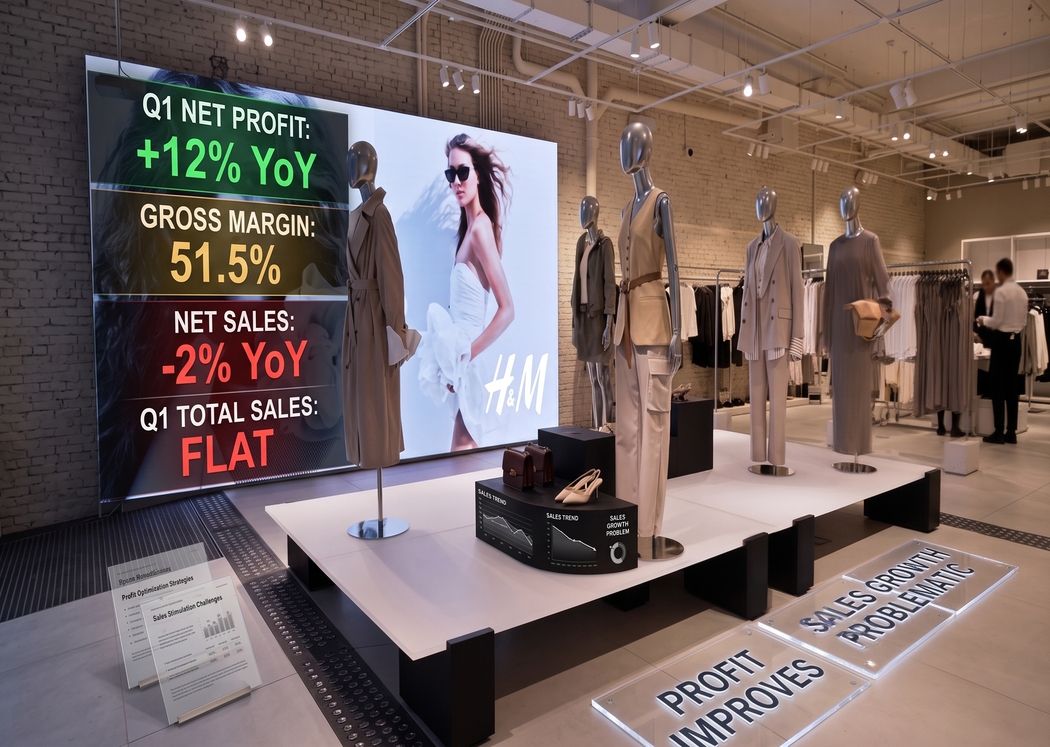
H&M’s latest results demonstrate how a retailer can become more profitable even when top-line growth remains difficult.
For the first nine months of its 2026 financial year, H&M reported operating profit of SEK 13.46 billion, up from SEK 12.03 billion in the comparable period. Its operating margin improved from 7.1% to 8.3%, while cash flow from operations increased 17%.
However, net sales declined in reported Swedish kronor and were broadly flat in local currencies.
For September, H&M expected local-currency sales to increase only around 1% from the previous year.
The numbers reveal the strategic challenge facing large fashion retailers.
Profitability can improve through better purchasing, inventory management, cost control and operational efficiency. H&M CEO Daniel Ervér specifically credited purchasing improvements, tighter costs and more efficient operations for the stronger profitability.
But efficiency alone cannot provide unlimited growth.
H&M operates in a fashion market where ultra-fast online competitors can introduce trends quickly, while premium brands compete through stronger differentiation and traditional retailers fight intensely over price.
The company therefore needs to improve margins while continuing to make its products relevant enough to generate stronger demand.
This makes H&M an interesting example of the broader retail environment.
The immediate financial story is positive: the business is becoming more efficient. The longer-term question is whether operational improvements can be combined with sustained sales growth.
For mature retailers, cutting costs can repair profitability. Creating the next phase of growth is usually harder.