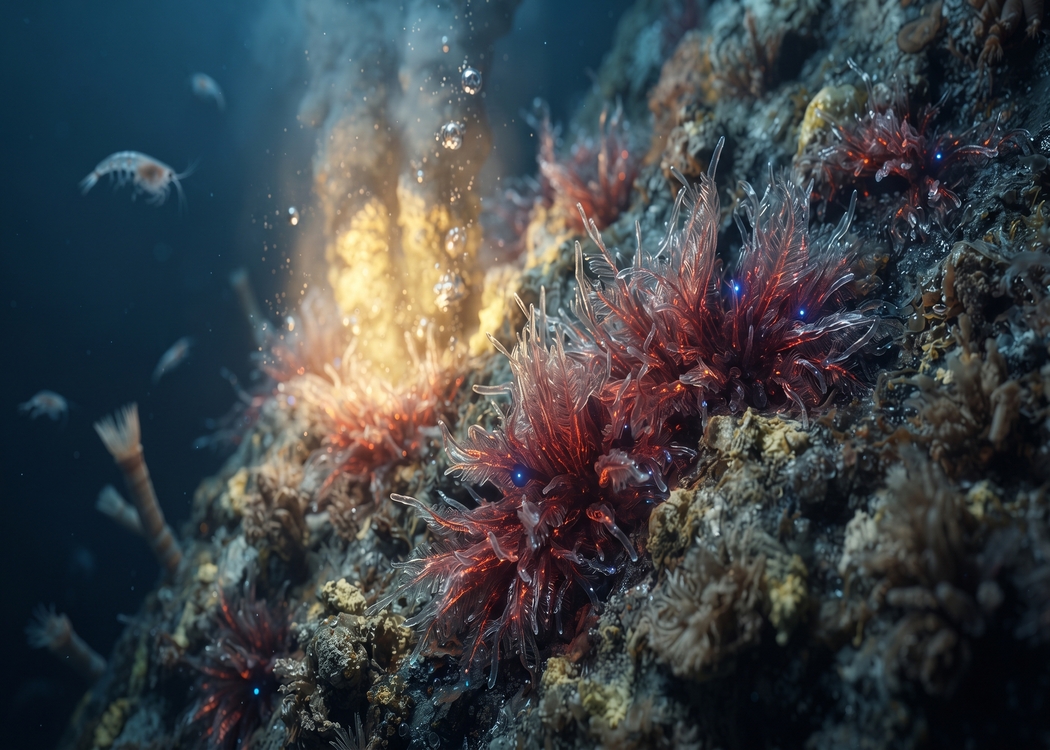
A newly identified organism from California’s Lassen Volcanic National Park reproduces at 63°C, expanding the known temperature range of life with a cell nucleus.
Scientists have identified a heat-loving amoeba that reproduces at temperatures beyond the previously documented limit for eukaryotes—the group of organisms whose cells contain a nucleus.
Named Incendiamoeba cascadensis and nicknamed the “fire amoeba,” the organism can divide at 63°C and continue moving at 64°C. The findings, published in Cell on September 22, raise the known upper temperature limit for eukaryotic reproduction from approximately 60°C, a record previously associated with certain fungi and red algae.
The discovery emerged from sampling in California’s Lassen Volcanic National Park. Researchers including Syracuse University biologists Beryl Rappaport and Angela Oliverio collected material from geothermal environments, ultimately recovering the amoeba from a tributary of Hot Springs Creek. Back in the laboratory, they increased incubation temperatures and watched the organism continue dividing.
Its ability to reproduce under those conditions is the central finding. Continued movement and survival after a brief heat exposure represent different biological limits.
According to NASA, which supported the research, the amoeba recovered after five minutes at 70°C when conditions cooled. That result does not mean it grows continuously at that temperature. Syracuse’s account describes the formation of dormant cysts, protective structures that allow the organism to endure conditions unsuitable for normal activity.
The researchers also investigated the cellular machinery behind this resilience. Their analysis identified an abundance of genes associated with maintaining functional proteins and sensing the environment compared with amoebae adapted to moderate temperatures. At higher temperatures, the organism increased the expression of pathways involved in protein maintenance, DNA repair and the movement of materials within cells.
Protein analysis offered another clue. The amoeba’s predicted proteins showed an enrichment of positively charged surface residues, a feature also found in some bacteria and archaea adapted to extreme heat. The researchers suggest that these similarities could reflect independently evolved strategies for keeping proteins stable under thermal stress. Further investigation will be needed to establish how individual adaptations contribute to survival.
Although often described as a breakthrough for “complex life,” the discovery concerns a single-celled organism. Its significance lies in the capabilities of a cell containing a nucleus and other internal structures, rather than evidence that animals or plants could tolerate similar conditions.
The finding also has implications for astrobiology. Studying organisms at Earth’s environmental extremes helps researchers assess which conditions might support life elsewhere. The fire amoeba broadens the evidence available for those assessments, although it does not establish that comparable organisms exist beyond Earth.
Closer to home, its adaptations could guide research into heat-stable enzymes and industrial biological processes. Those possibilities remain prospective, but the discovery already offers a concrete lesson: Earth’s geothermal habitats still contain organisms capable of revising long-standing assumptions about the limits of living cells.
Sources: