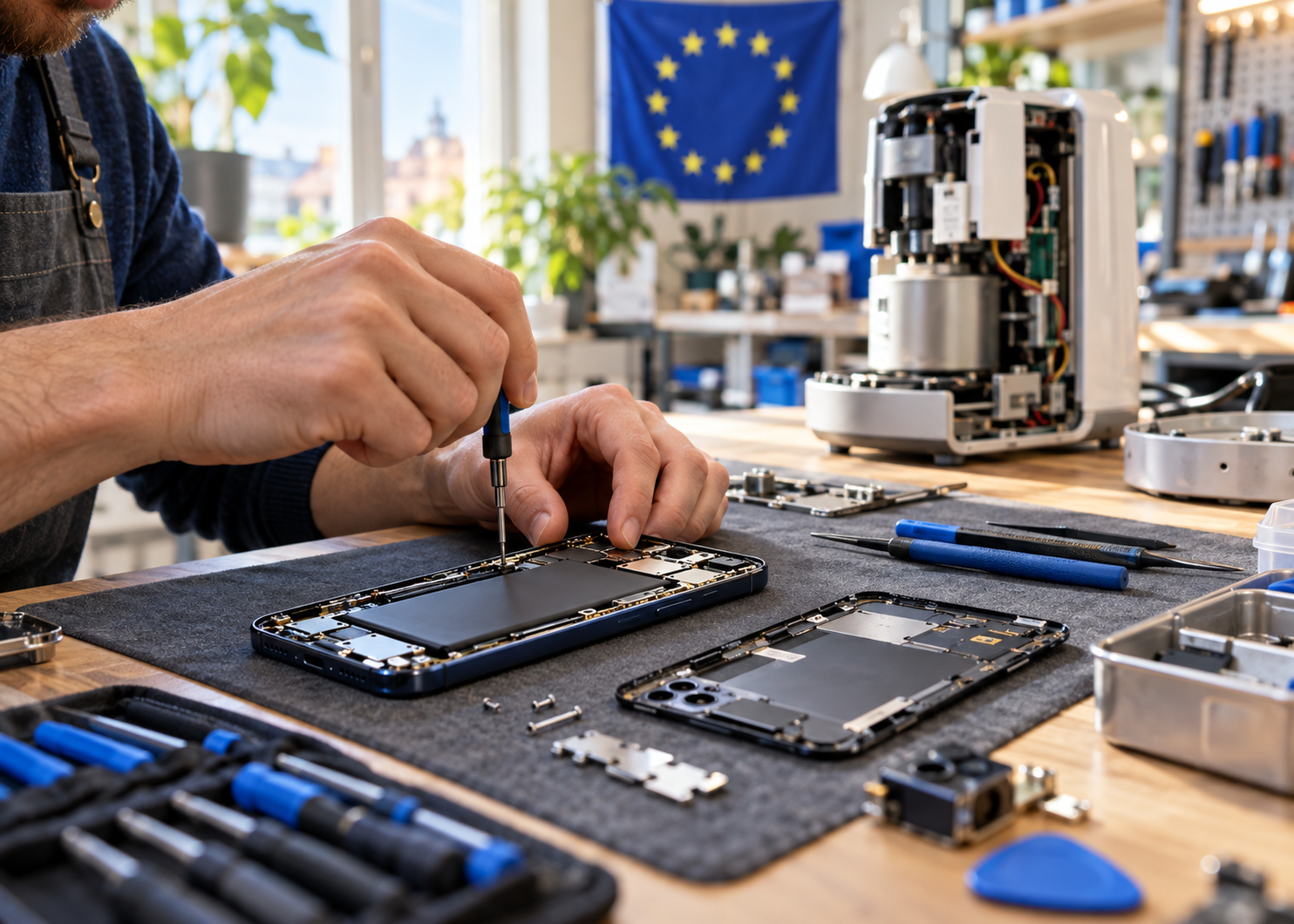
EU measures aim to make repairs more accessible, extend product lifespans and encourage households to keep usable goods for longer.
Consumers in the European Union have stronger support for repairing faulty products under legislation that member countries were required to apply from 31 July 2026.
The right-to-repair directive aims to make fixing damaged goods a more practical option, including when the legal guarantee has expired. It forms part of a broader European effort to reduce waste and extend the useful life of everyday products.
For households, the measures address a familiar frustration: a broken appliance or phone can be expensive and inconvenient to repair, making replacement seem easier. The Council of the European Union identifies those obstacles as a major reason repairable goods are discarded prematurely.
Under the rules, manufacturers must repair covered products within a reasonable timeframe and at a reasonable price. The obligation applies to categories listed in the directive that are subject to EU repairability requirements, including certain smartphones, washing machines and refrigerators. It does not create an unrestricted repair entitlement for every consumer product.
The legislation also offers an incentive to repair goods during the legal guarantee period. Consumers who choose repair instead of replacement receive an additional year of legal guarantee protection. This concerns statutory consumer rights, rather than an automatic extension of every commercial warranty.
Access to information and parts is another focus. Manufacturers must make details of repair services readily available, including indicative prices for typical repairs. For covered goods, unjustified contractual clauses or hardware and software techniques that obstruct repairs are prohibited. Spare parts supplied by manufacturers must be reasonably priced.
Repairers can also use a standard European information form to explain prices, conditions and expected completion times. When provided, its terms generally remain valid for 30 days, giving consumers an opportunity to compare offers.
The practical impact will depend on the experience consumers encounter when something breaks. A repair option becomes more attractive when the price is clear, the necessary parts are available and the wait is manageable.
For households weighing their next purchase, the measures give greater importance to a question that extends beyond the initial price: how easily can a product be kept working?
Sources: