The Kebaya’s UNESCO Recognition Celebrates a Shared Southeast Asian Heritage
The joint inscription by five countries honours the craftsmanship, community traditions and everyday practices that keep the kebaya alive.
The kebaya’s inclusion on UNESCO’s Representative List of the Intangible Cultural Heritage of Humanity recognises a living tradition shared across Brunei, Indonesia, Malaysia, Singapore and Thailand.
Inscribed on 4 December 2024, “Kebaya: Knowledge, Skills, Traditions and Practices” received unanimous support from UNESCO’s Intergovernmental Committee following a multinational nomination. The recognition covers the cultural knowledge surrounding the garment, including the skills involved in making it and the traditions associated with wearing it.
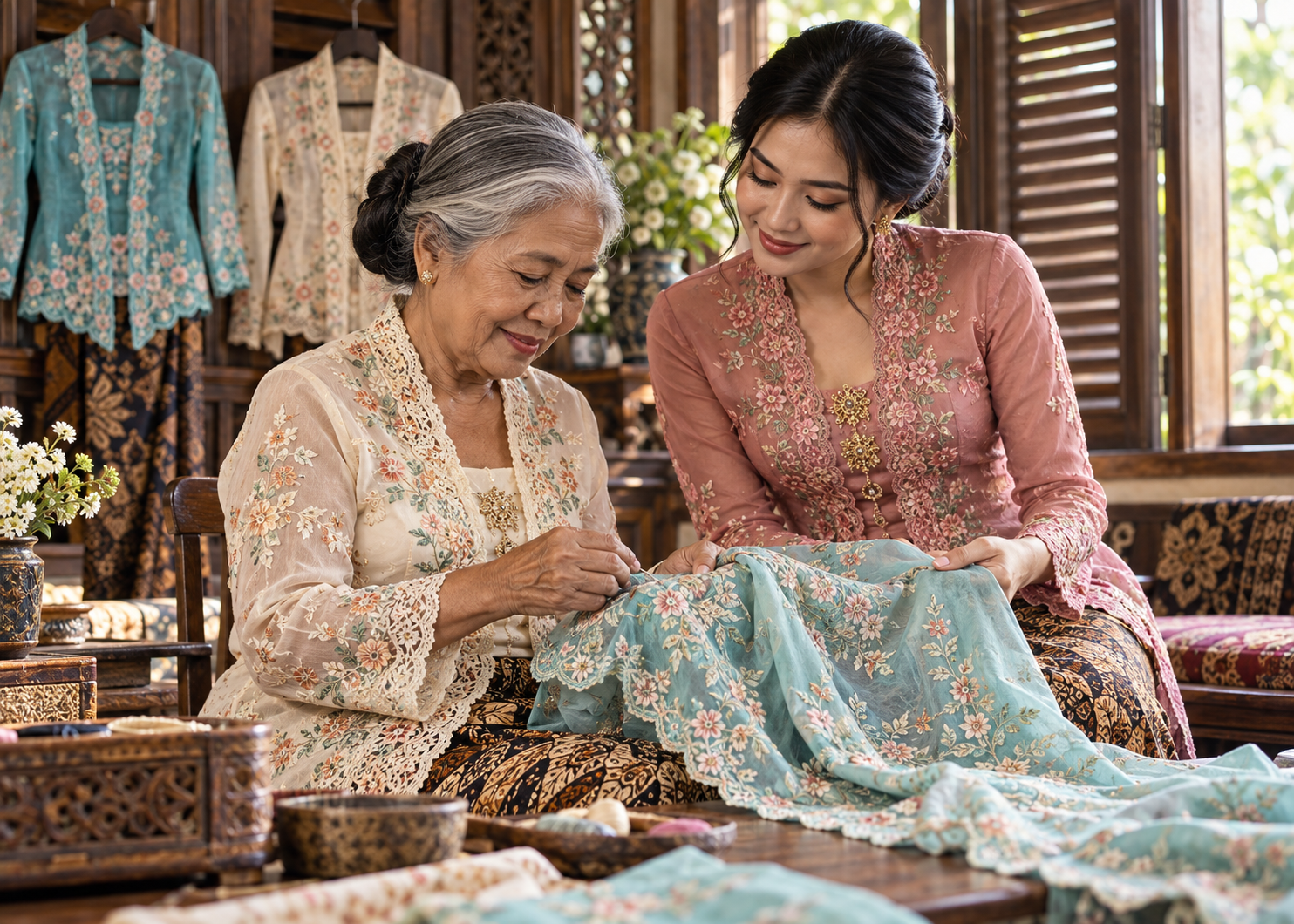
UNESCO describes the kebaya as a front-opening top, often decorated with embroidery and secured with brooches or buttons. Its length, styling and accompanying garments vary, reflecting the communities in which it is made and worn.
The kebaya appears at social gatherings, festivals and formal occasions, as well as in everyday settings. It also features in dance, theatre and film, while contemporary designs allow wearers to express cultural identity in new ways.
Behind each garment is a combination of practical knowledge and craftsmanship. Makers select and cut fabrics, develop designs, choose accessories and apply sewing and embroidery techniques.
Traditionally, these skills were often passed informally from mothers to daughters. UNESCO notes that learning now also takes place through schools and workshops, with men participating in the garment’s production and design.
The nomination itself brought communities and institutions together. According to Singapore’s National Heritage Board, representatives from the five participating countries worked alongside state agencies to develop the nomination documents, which were submitted in March 2023. The process involved craftspeople, community networks and others invested in the tradition’s future.
The shared inscription gives the recognition a significance beyond fashion. UNESCO’s assessment identifies the kebaya as a cultural connection that crosses national, ethnic and religious boundaries while retaining distinct local expressions.
For Malaysia and its neighbours, that offers an opportunity to celebrate both regional connections and the particular histories carried by different styles.
International recognition can draw attention to the kebaya, but its continuity rests with the people who make, wear and teach it. Every new maker learning an embroidery technique, and every wearer finding a place for the garment in contemporary life, helps carry that heritage forward.
Sources: