GLOBAL PR NEWSROOM
    • GLOBAL PR NEWSWIRE
    • GLOBAL PR NEWSROOM
    • GLOBAL PR DISTRIBUTION
    • GLOBAL PR RESOURCES
  • Business
  • Technology
  • World
  • Science
  • Entertainment
  • More
    • HEALTH
    • OTHERS
    • ALL
  • No Result
    View All Result
  • Sign In
  • Sign Up
SUBMIT A STORY
GLOBAL PR NEWS NEWROOMS
    • GLOBAL PR NEWSWIRE
    • GLOBAL PR NEWSROOM
    • GLOBAL PR DISTRIBUTION
    • GLOBAL PR RESOURCES
  • Business
  • Technology
  • World
  • Science
  • Entertainment
  • More
    • HEALTH
    • OTHERS
    • ALL
  • No Result
    View All Result
  • Sign In
  • Sign Up
GLOBAL PR NEWS
No Result
View All Result
Home Health

A Gut-Bacterial Compound Is Linked to Alzheimer’s Risk

by Jia Bao Chng
October 9, 2026
Reading Time: 2 mins read
0
A Gut-Bacterial Compound Is Linked to Alzheimer’s Risk

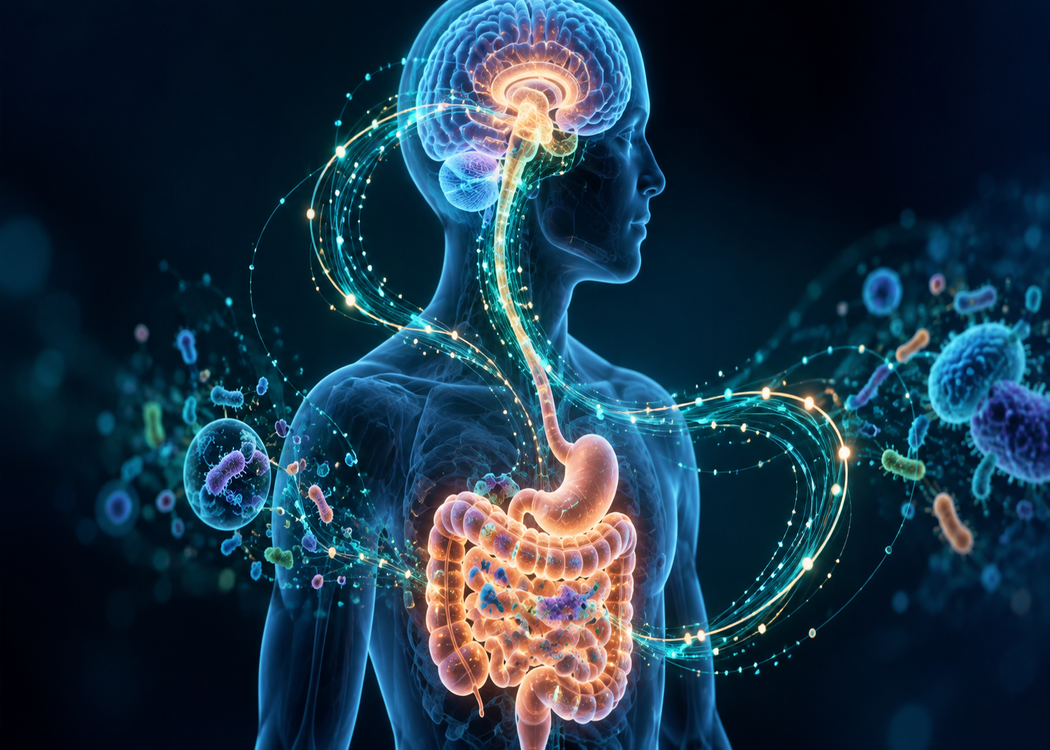
A study combining human observations with laboratory experiments identifies a possible connection between gut microbes and Alzheimer’s-related brain changes.

A compound produced by some gut bacteria has been linked to cognitive decline and biological changes associated with Alzheimer’s disease, offering researchers a potential new target for investigation.

The study, published in Nature Communications on 26 June 2026, examined imidazole propionate, or ImP. Researchers led by University of Wisconsin–Madison scientists analysed blood samples from 1,196 adults without cognitive impairment, alongside cognitive assessments and markers of brain health.

Higher blood levels of ImP were associated with poorer cognitive performance and Alzheimer’s-related biomarkers. Participants with the highest levels also experienced faster cognitive decline over time, according to the university’s account of the findings.

Laboratory experiments helped researchers investigate how the compound might contribute to those changes. Chronic ImP administration worsened Alzheimer’s-like pathology in mice. Experiments also showed effects on the brain’s protective blood-vessel barrier and increased abnormal modification of tau in nerve cells, suggesting possible biological pathways connecting the compound with neurodegeneration.

The human findings establish an association, while the experiments provide evidence of possible mechanisms. Together, they strengthen the case for further investigation, but do not demonstrate that lowering ImP prevents Alzheimer’s disease in people.

The team also identified a genetic variation linked to substantially higher ImP levels. Present in approximately 43% of study participants, it may influence how effectively the kidneys remove the compound from the bloodstream. That explanation remains a proposed mechanism rather than an established clinical finding.

Researchers now want to explore whether reducing circulating ImP could lower dementia risk or slow cognitive decline. The study does not establish an effective ImP-lowering treatment for Alzheimer’s, and potential interventions would require further testing for safety and benefit.

The findings add detail to research on the connection between the gut and brain. By identifying a specific bacterial compound, scientists have a more focused target to examine—and a clearer question to answer: whether changing its production or clearance can meaningfully protect human brain health.

Sources:

  • Nature Communications — Original peer-reviewed study
  • University of Wisconsin–Madison — Findings and potential treatment implications

RELATED NEWS

A Sugar Found in Red Meat Is Linked to Higher Type 2 Diabetes Risk
Health

A Sugar Found in Red Meat Is Linked to Higher Type 2 Diabetes Risk

October 9, 2026

A large French study found an association involving meat-derived Neu5Gc, but could not establish that the compound itself causes diabetes....

Just 10 Minutes of Slow Jogging May Improve Mood and Focus
Health

Just 10 Minutes of Slow Jogging May Improve Mood and Focus

October 9, 2026

A small Japanese study found that a brief, gentle treadmill run improved mood and performance on an attention task. Ten...

Alzheimer’s Blood Tests Bring Family Doctors Closer to Specialist-Level Accuracy
Health

Alzheimer’s Blood Tests Bring Family Doctors Closer to Specialist-Level Accuracy

October 9, 2026

A Swedish study suggests blood biomarkers could improve Alzheimer’s assessment in everyday medical care, while professional guidance sets limits on...

Next Post
Just 10 Minutes of Slow Jogging May Improve Mood and Focus

Just 10 Minutes of Slow Jogging May Improve Mood and Focus

Leave a Reply Cancel reply

Your email address will not be published. Required fields are marked *

About Global PR News

Global PR News is a newswire distributing press releases and company announcements across business, technology, science, health, and world news.

Recent Stories

  • The Global Renewable Energy Milestone
  • Global Education Reform for the AI Era

Categories

  • Business
  • Entertainment
  • Health
  • Others
  • Science
  • Technology
  • World

Follow Us

Facebook Twitter Instagram

Privacy Policy  |  © 2026 Global PR News. All rights reserved.

No Result
View All Result
  • GLOBAL PR
    • GLOBAL PR NEWSWIRE
    • GLOBAL PR NEWSROOM
    • GLOBAL PR DISTRIBUTION
    • GLOBAL PR RESOURCES
  • Business
  • Technology
  • World
  • Science
  • Entertainment
  • Health
  • Others
  • Sign In
  • Sign Up