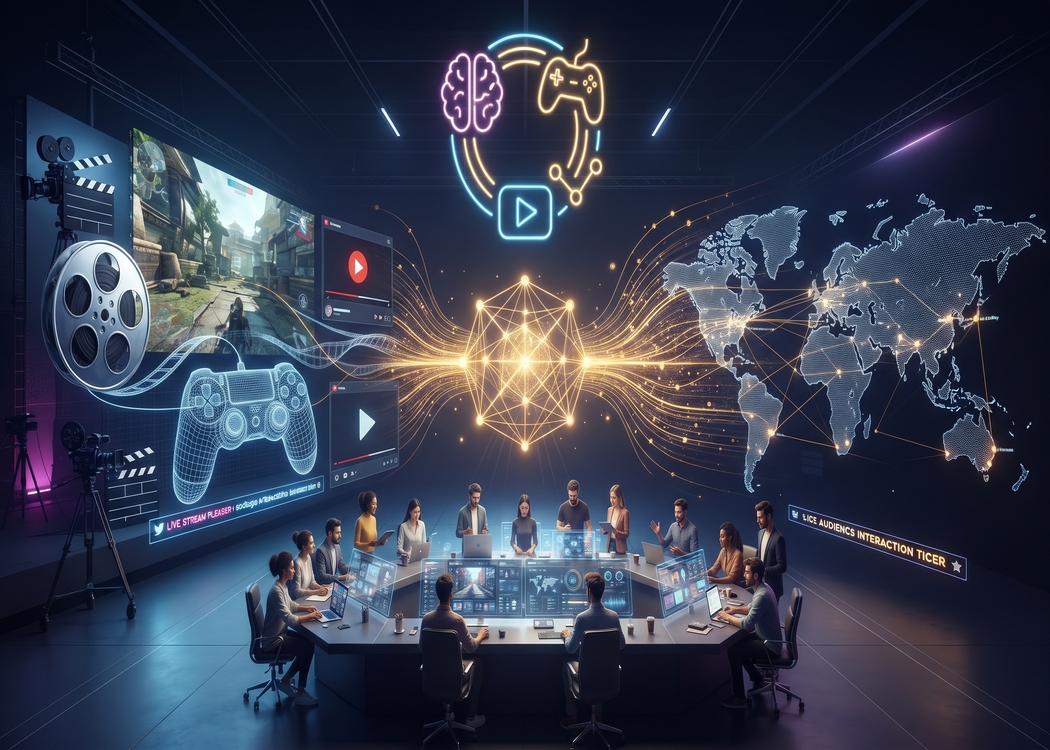
Variety’s 2026 Entertainment & Technology Summit highlighted how audience relationships increasingly connect studios, gaming companies, creators and advertisers.
The boundaries separating Hollywood, gaming and digital creators are becoming harder to draw. At Variety’s Entertainment & Technology Summit on September 17 in Beverly Hills, executives and creative professionals gathered to discuss a business increasingly shaped by overlapping platforms, technologies and fan communities. Presented by EY, the event brought together companies including Sony, Warner Bros., Mattel and Reddit.
The lineup offered a snapshot of that convergence. The summit’s published program included leaders from Crunchyroll, Tetris, Nintendo of America, Mattel and Hasbro alongside television executives, filmmakers and creator businesses. Its agenda connected programming and storytelling with live experiences, advertising and artificial intelligence.
Taken together, those priorities suggest an industry thinking beyond individual releases. A film, television series or game can become the starting point for a broader relationship with audiences—one that continues through online communities, merchandise, creator collaborations and physical experiences.
That changes the commercial question. Alongside asking whether people will watch or play, entertainment companies must consider what will keep those audiences involved between releases.
The summit’s experiential programming reflected that ambition. A session featuring representatives from Sega, Hallmark and Paramount focused on extending screen properties into real-world experiences and using events to deepen fandom. Such approaches create opportunities to earn revenue beyond a ticket or subscription, while giving audiences another way to participate in the stories they enjoy.
Creators also occupied a prominent place in the discussion. A session involving Comscore, JesserCo and Culture Genesis examined the role of creator content in brand discovery and audience engagement, including how measurement can help advertisers evaluate its value. The framing positioned creator partnerships as a substantial part of media strategy.
The implication is significant: creators can function as both entertainment producers and routes to an audience. For studios and brands, a partnership therefore involves more than purchasing exposure. It requires understanding the relationship that makes a creator’s audience listen in the first place.
Marketing is becoming similarly interconnected. The summit’s marketing panel brought together representatives from companies including TikTok, Spotify, Pinterest and Lionsgate, with an agenda spanning creator media, television, audio and outdoor advertising. Its central question was how to turn attention across those channels into lasting fandom.
None of this means entertainment’s separate businesses have become interchangeable. Producing a feature film, maintaining a game and sustaining a creator channel demand different skills, budgets and measures of success. A conference program also cannot establish that every cross-platform strategy will pay off.
What it does reveal is a shared direction of travel. Entertainment companies are increasingly planning around the connections between formats. The opportunity lies in giving audiences compelling reasons to follow a story across them—and ensuring that each new experience deserves their attention.
Sources: