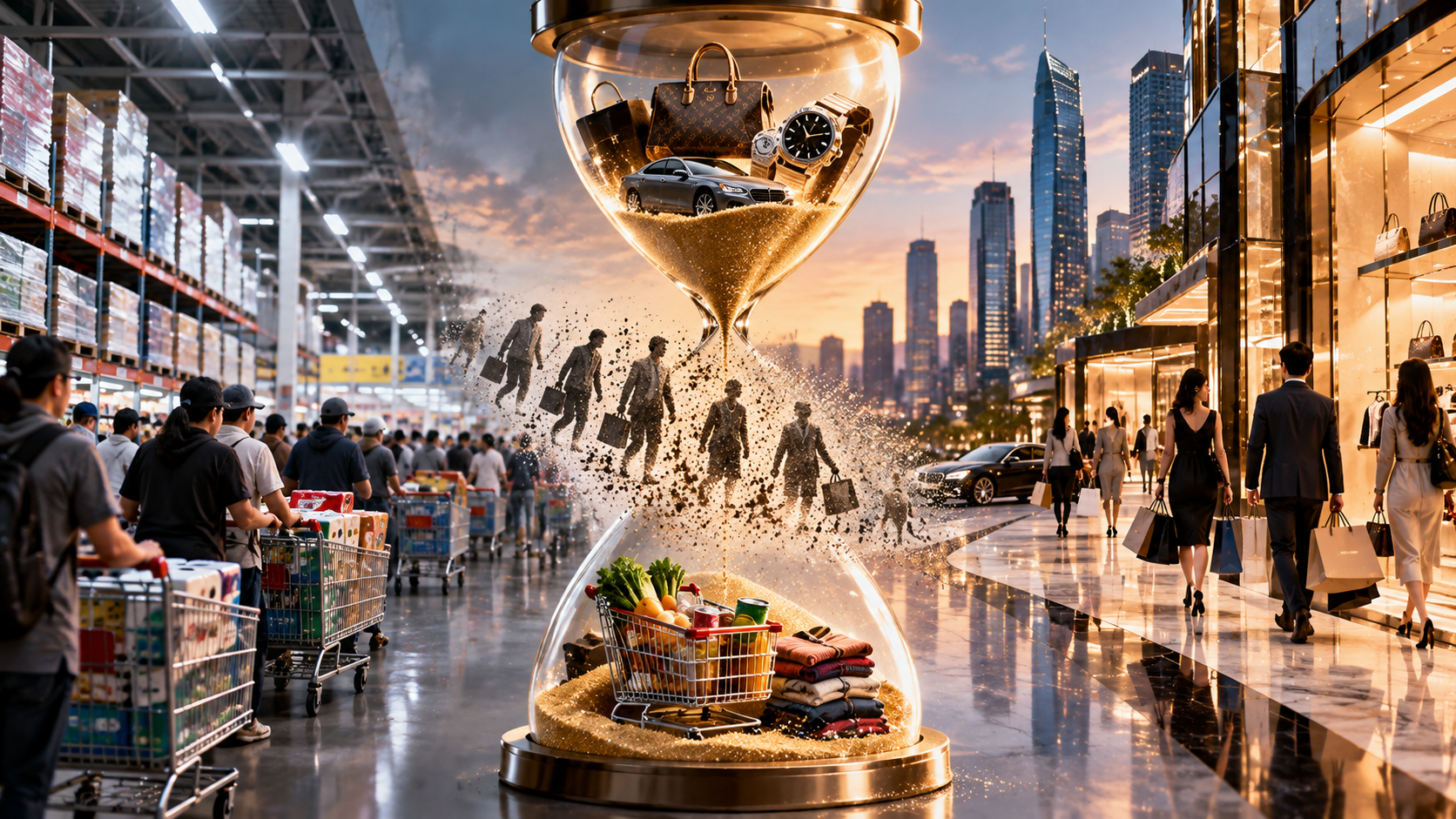
The retail market is increasingly being described as an “hourglass economy”: consumer demand appears strong at both the value and premium ends of the market, while many brands positioned in the middle face greater competitive pressure.
At one end are ultra-low-cost marketplaces and discount retailers. Platforms such as Temu and Shein have trained consumers to compare enormous selections of inexpensive products almost instantly. Their supply chains, digital advertising systems and data-driven merchandising can put considerable pricing pressure on traditional retailers.
At the opposite end, established luxury groups compete on something entirely different: scarcity, craftsmanship, heritage, exclusivity and status. Consumers buying premium luxury goods are not necessarily looking for the cheapest functional alternative. The brand itself contributes significantly to the perceived value.
The difficult position is therefore the middle.
A retailer selling a relatively ordinary product at a moderately high price can face competition from both directions. Consumers may ask why they should pay considerably more than a discount alternative if the product does not offer an obvious improvement. At the same time, the brand may lack the prestige necessary to justify luxury-level margins.
This does not mean every mid-market retailer will disappear. However, it increases pressure on companies to establish a clear reason for customers to choose them.
Successful retailers may need to offer exceptional convenience, distinctive products, superior customer experiences or strong brand communities rather than relying primarily on traditional middle-market positioning.
In an hourglass market, being merely “good enough” becomes increasingly difficult to defend.