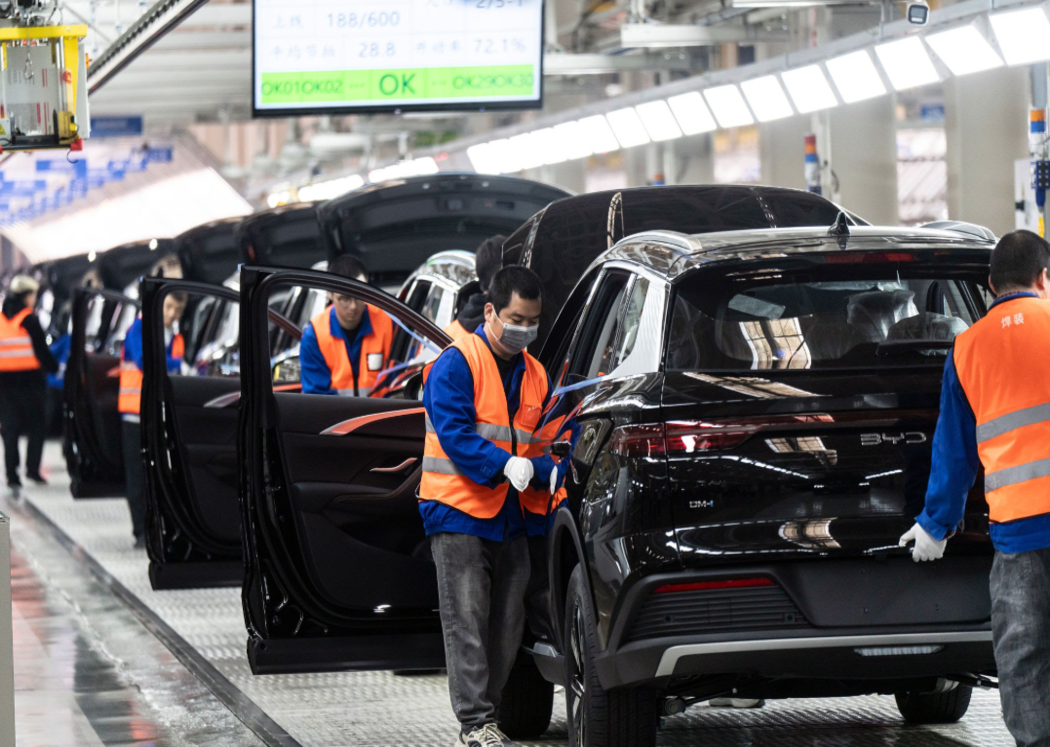
BYD’s transformation from a Chinese battery manufacturer into one of the world’s most important electric-vehicle companies is increasingly becoming an international story.
After building enormous scale in China, the company has been expanding manufacturing and sales operations across Europe and other overseas markets. In Europe, BYD is preparing production at its Hungarian passenger-car factory and has indicated that additional manufacturing capacity will eventually be required as its regional business expands. A company adviser told Reuters in September that BYD could ultimately need three vehicle assembly plants and a battery factory in Europe.
BYD is also expanding beyond passenger cars. The company plans to introduce heavy-duty electric trucks in Europe and develop local production, part of what executives describe as an effort to operate increasingly like a European manufacturer rather than simply an exporter from China.
One important advantage is vertical integration.
BYD produces its own Blade batteries and controls substantial portions of its electric drivetrain, electronics and manufacturing ecosystem. It has even invested in vehicle-carrying ships to support international distribution.
This gives BYD greater control over cost, supply and production than automakers that depend heavily on outside suppliers.
However, describing its advantage as a fixed 20–30% cost cushion against every Western competitor would be too broad. Cost differences depend on model, market, tariffs, local production and supply-chain structure.
The larger strategic point remains: BYD is demonstrating how Chinese EV manufacturers can combine enormous domestic scale with vertically integrated manufacturing and increasingly localized overseas production.
The global EV competition is therefore shifting from Chinese exports versus Western automakers toward Chinese manufacturers becoming local competitors inside overseas markets.