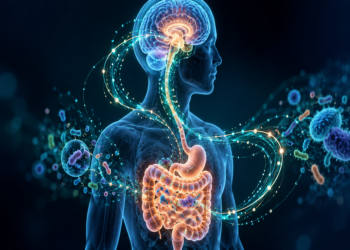
Brain-computer interfaces are moving closer to restoring something far more natural than typing words on a screen: human conversation itself.
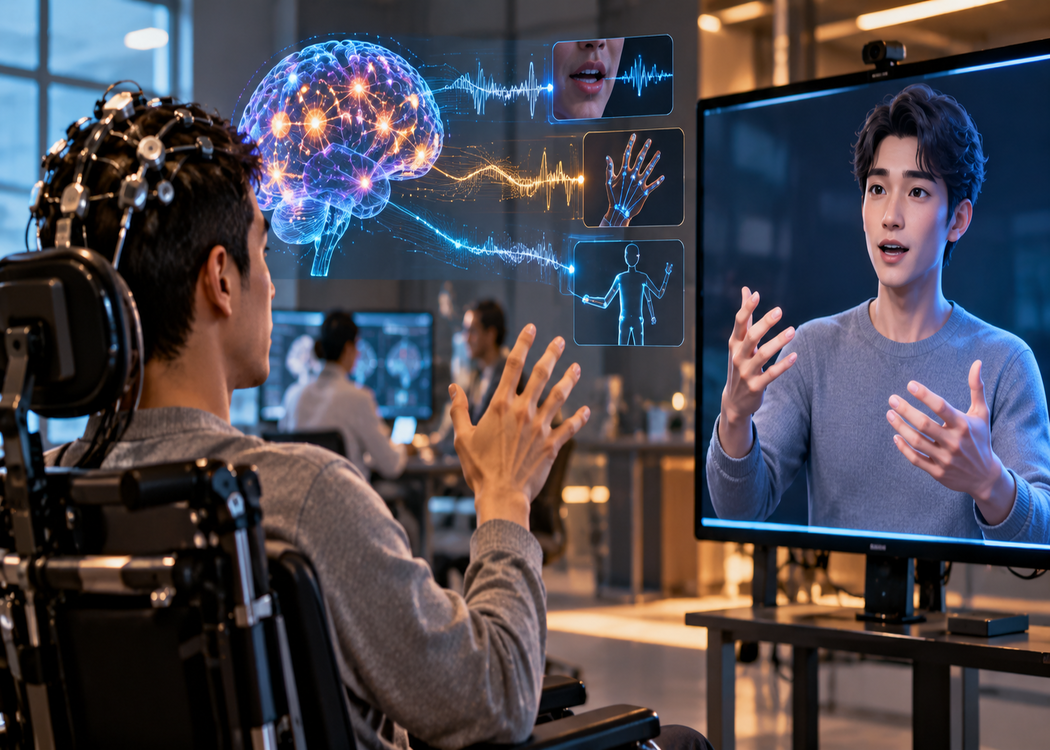
Researchers have demonstrated a neuroprosthetic system capable of decoding attempted speech and body gestures at the same time. Sensors implanted in the brain recorded activity from regions of the motor cortex associated with movements that the participant attempted to make.
Machine-learning algorithms then interpreted those neural signals and translated them into the actions of a personalized digital avatar.
The system could reproduce aspects of spoken communication while also representing movements and gestures. This distinction matters because people do not communicate through words alone. Facial expressions, hand gestures, body movements and timing can all change the meaning and emotional tone of a conversation.
Earlier brain-computer interfaces have already demonstrated remarkable abilities, including converting attempted speech into text or synthesized voices and allowing people with paralysis to control computer systems. Combining several forms of communication represents another step toward making these technologies feel less mechanical.
Researchers are also interested in developing a fully implantable wireless version, which could reduce dependence on external cables and bulky laboratory equipment.
There are still significant technical and medical challenges before such systems become widely available. Brain implants require surgery, and researchers must establish long-term reliability, safety and usability.
Nevertheless, the goal is becoming increasingly ambitious. Rather than simply giving people with paralysis another way to operate a computer, future neuroprostheses may help restore the expressive qualities of face-to-face communication.