GLOBAL PR NEWSROOM
    • GLOBAL PR NEWSWIRE
    • GLOBAL PR NEWSROOM
    • GLOBAL PR DISTRIBUTION
    • GLOBAL PR RESOURCES
  • Business
  • Technology
  • World
  • Science
  • Entertainment
  • More
    • HEALTH
    • OTHERS
    • ALL
  • No Result
    View All Result
  • Sign In
  • Sign Up
SUBMIT A STORY
GLOBAL PR NEWS NEWROOMS
    • GLOBAL PR NEWSWIRE
    • GLOBAL PR NEWSROOM
    • GLOBAL PR DISTRIBUTION
    • GLOBAL PR RESOURCES
  • Business
  • Technology
  • World
  • Science
  • Entertainment
  • More
    • HEALTH
    • OTHERS
    • ALL
  • No Result
    View All Result
  • Sign In
  • Sign Up
GLOBAL PR NEWS
No Result
View All Result
Home Science

The First “Artificial Life-Form” with a Redesigned Genome

by Jia Bao Chng
October 9, 2026
Reading Time: 2 mins read
0
The First “Artificial Life-Form” with a Redesigned Genome

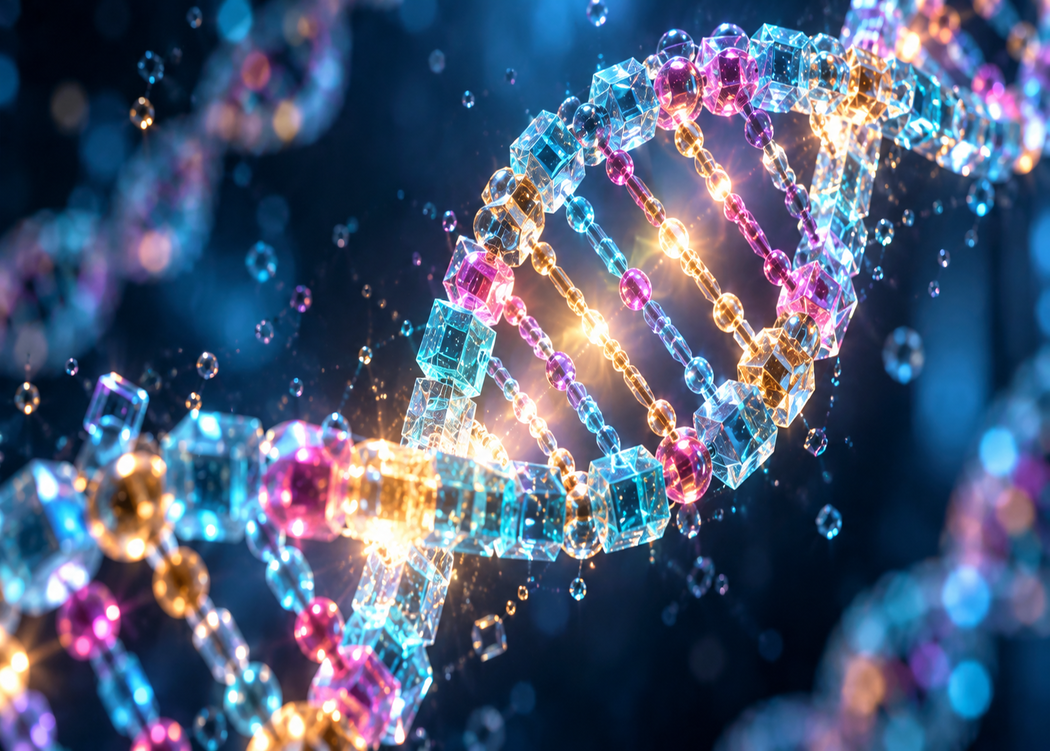
Researchers rebuilt the genome of E. coli using fewer genetic instructions, demonstrating how extensively biology’s code can be rewritten.

Scientists at the Medical Research Council Laboratory of Molecular Biology achieved a major synthetic-biology milestone by constructing a redesigned version of the Escherichia coli genome. Published in Nature in May 2019, the research produced a living bacterium called Syn61, whose synthetic genome contained approximately four million DNA base pairs.

The achievement centred on simplifying the genetic code. Cells read genetic information in three-letter units called codons, which specify amino acids or signal when protein production should stop. The standard code contains 64 codons, with several providing alternative instructions for the same amino acid.

Researchers replaced 18,214 occurrences of selected codons, allowing Syn61 to operate with 61 codons while still producing proteins containing the usual 20 amino acids. The result demonstrated that some redundancy in the genetic code could be removed across an entire bacterial genome.

This was extensive genome redesign, rather than the creation of a wholly new biological system. Syn61 remained based on E. coli, retaining the underlying machinery and biological functions of its bacterial ancestor. The experiment changed how familiar biological instructions were encoded.

The work also created opportunities for expanding what engineered cells can manufacture. In subsequent research reported in 2021, the team reassigned freed-up codons to support the production of polymers containing nonstandard building blocks and demonstrated resistance to tested viruses. Such capabilities could contribute to future medicines and materials, although those applications require further development.

The lasting significance is a clearer understanding of how flexible the genetic code can be—and a foundation for designing cells with capabilities beyond those found in their natural ancestors.

Sources:

  • Nature — Total synthesis of Escherichia coli with a recoded genome
  • PubMed — Study abstract and publication details
  • MRC Laboratory of Molecular Biology — Subsequent polymer synthesis and viral-resistance research

RELATED NEWS

Scientists Develop New Ways to Control the Mirror Images of Molecules
Science

Scientists Develop New Ways to Control the Mirror Images of Molecules

October 8, 2026

Chemists are developing increasingly sophisticated techniques for controlling the three-dimensional structure of molecules, potentially improving the way medicines and advanced...

Scientists Explore Vast Underground Reserves of Natural Hydrogen
Science

Scientists Explore Vast Underground Reserves of Natural Hydrogen

October 8, 2026

A potentially important new source of low-carbon energy may be hiding deep beneath the Earth's surface. Scientists are investigating geologic...

Logical Qubits Bring Quantum Computing Closer to Reliable Operation
Science

Logical Qubits Bring Quantum Computing Closer to Reliable Operation

October 8, 2026

Quantum computing researchers are making progress toward one of the field's most difficult objectives: building computers that can perform calculations...

Next Post
A New Weapon Against Superbugs: AI Designs Novel Antibiotics

A New Weapon Against Superbugs: AI Designs Novel Antibiotics

Leave a Reply Cancel reply

Your email address will not be published. Required fields are marked *

About Global PR News

Global PR News is a newswire distributing press releases and company announcements across business, technology, science, health, and world news.

Recent Stories

  • The Global Renewable Energy Milestone
  • Global Education Reform for the AI Era

Categories

  • Business
  • Entertainment
  • Health
  • Others
  • Science
  • Technology
  • World

Follow Us

Facebook Twitter Instagram

Privacy Policy  |  © 2026 Global PR News. All rights reserved.

No Result
View All Result
  • GLOBAL PR
    • GLOBAL PR NEWSWIRE
    • GLOBAL PR NEWSROOM
    • GLOBAL PR DISTRIBUTION
    • GLOBAL PR RESOURCES
  • Business
  • Technology
  • World
  • Science
  • Entertainment
  • Health
  • Others
  • Sign In
  • Sign Up