Malaysia is positioning itself as a regional destination for high-value technology and advanced-manufacturing investment.
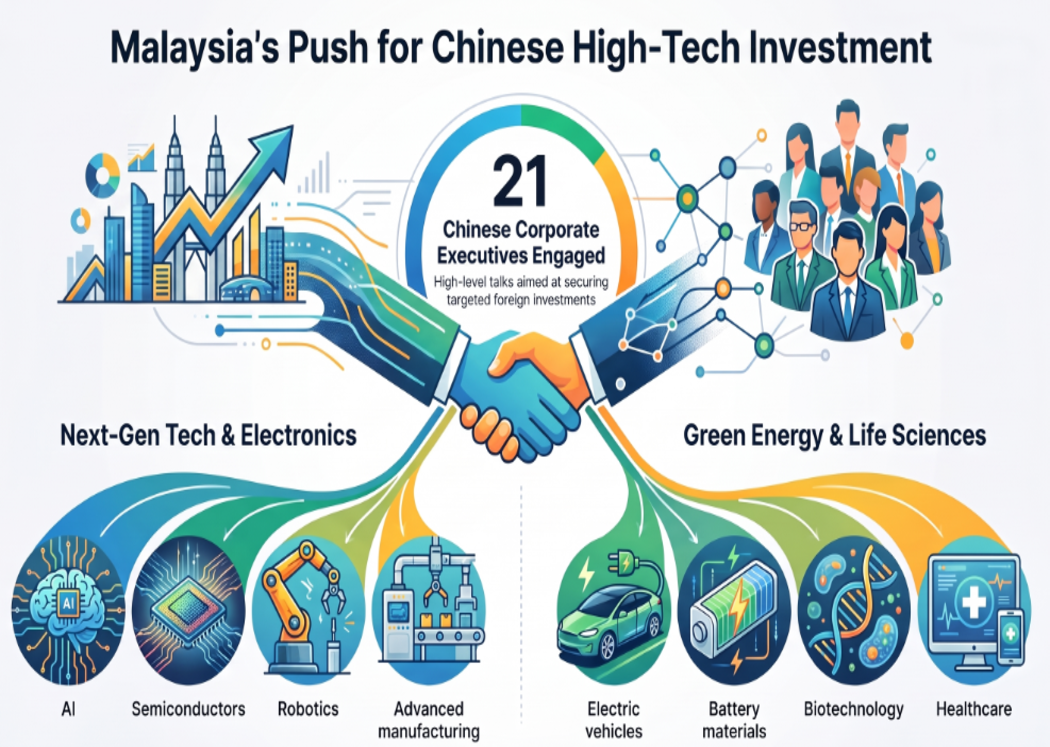
During a September working visit to Shanghai and Hangzhou, Malaysian officials held a roundtable with executives from 21 leading Chinese companies, alongside targeted meetings with five major industrial groups.
The discussions covered semiconductors, artificial intelligence, robotics, electric vehicles, battery materials, advanced optics, biotechnology, healthcare, specialty chemicals and advanced manufacturing.
Following the visit, Prime Minister Anwar Ibrahim said the discussions had generated more than RM28 billion in potential investments.
The emphasis on technology is significant for Malaysia.
The country already occupies an important position in the global semiconductor supply chain, particularly in assembly, testing and packaging. The strategic objective is increasingly to move into higher-value areas of the technology ecosystem while expanding local engineering expertise.
AI data centers, chip manufacturing, robotics and EV supply chains can also reinforce one another.
Semiconductor investment creates demand for skilled engineering talent. Data-center growth increases demand for power and digital infrastructure. EV and battery investment can deepen advanced-manufacturing capabilities.
However, announced or potential investment should be distinguished from capital already deployed. Projects still need to move through site selection, approvals, construction and hiring before their full economic impact becomes visible.
Malaysia’s challenge is therefore not simply attracting investment commitments.
The more important question is how much technology transfer, local supplier participation, skilled employment and domestic intellectual property those investments eventually create.
If those linkages develop successfully, Malaysia can strengthen its role as more than a manufacturing location and become a deeper participant in Asia’s technology ecosystem.