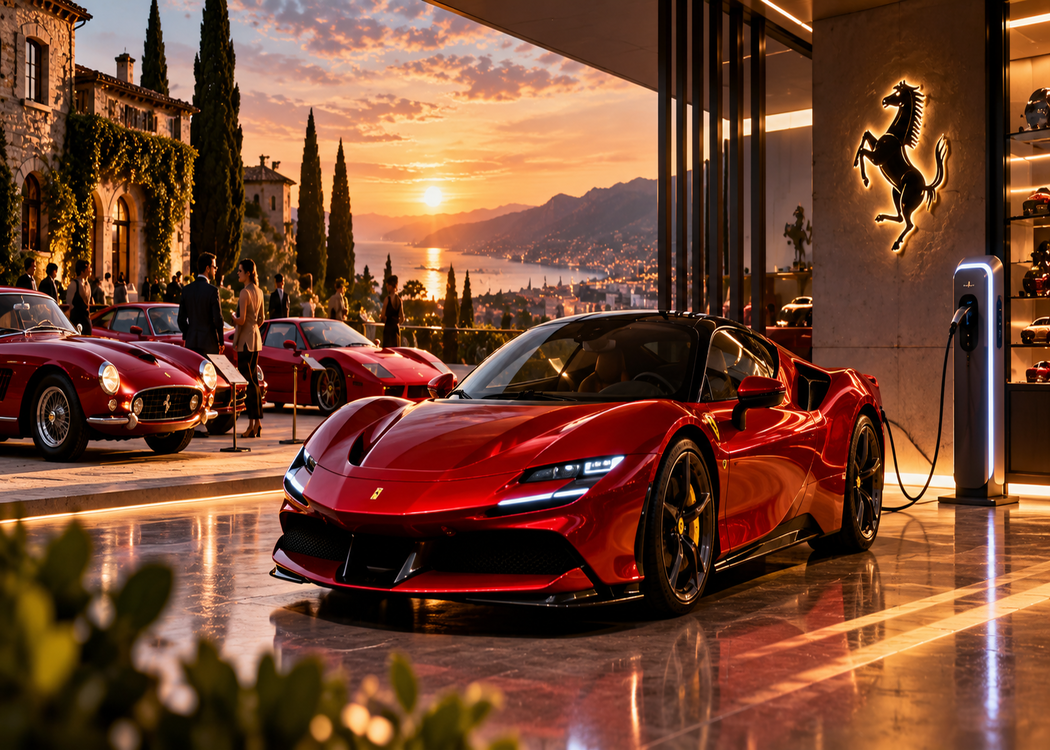
Ferrari occupies an unusual position in the automotive industry because it does not compete primarily on transportation.
It sells scarcity, performance, heritage and membership in an exclusive brand ecosystem.
That business model helps explain why Ferrari can generate margins that look very different from those of mass-market automakers. Rather than maximizing production volume, the company carefully manages supply relative to demand.
This is sometimes described using the economic idea of a Veblen good—a luxury product whose desirability can be reinforced rather than destroyed by an extremely high price because exclusivity itself contributes to its appeal.
Electrification creates an interesting test for that model.
Ferrari must participate in technological change without making its vehicles feel interchangeable with increasingly powerful electric cars from less prestigious manufacturers.
The problem is therefore not simply engineering an electric drivetrain.
Ferrari must translate the emotional elements associated with its brand—performance, design, driving experience and scarcity—into a different propulsion architecture.
The broader luxury-car market is wrestling with the same question. Reuters reported in September that manufacturers are trying to determine whether wealthy buyers will embrace electric luxury vehicles as enthusiastically as conventional high-performance models.
Ferrari’s strongest defense is its brand rather than any single engine technology.
If customers primarily purchased Ferraris because of horsepower figures, competitors could eventually reproduce those specifications. The harder asset to copy is decades of racing history, controlled supply and social status.
Electrification therefore presents both risk and opportunity.
Ferrari needs to modernize without destroying the scarcity that supports its pricing power. The company’s moat is ultimately not combustion. It is desirability.