GLOBAL PR NEWSROOM
    • GLOBAL PR NEWSWIRE
    • GLOBAL PR NEWSROOM
    • GLOBAL PR DISTRIBUTION
    • GLOBAL PR RESOURCES
  • Business
  • Technology
  • World
  • Science
  • Entertainment
  • More
    • HEALTH
    • OTHERS
    • ALL
  • No Result
    View All Result
  • Sign In
  • Sign Up
SUBMIT A STORY
GLOBAL PR NEWS NEWROOMS
    • GLOBAL PR NEWSWIRE
    • GLOBAL PR NEWSROOM
    • GLOBAL PR DISTRIBUTION
    • GLOBAL PR RESOURCES
  • Business
  • Technology
  • World
  • Science
  • Entertainment
  • More
    • HEALTH
    • OTHERS
    • ALL
  • No Result
    View All Result
  • Sign In
  • Sign Up
GLOBAL PR NEWS
No Result
View All Result
Home Others

NASA Finds a Huge New Crater on the Moon

by Jia Bao Chng
October 9, 2026
Reading Time: 3 mins read
0
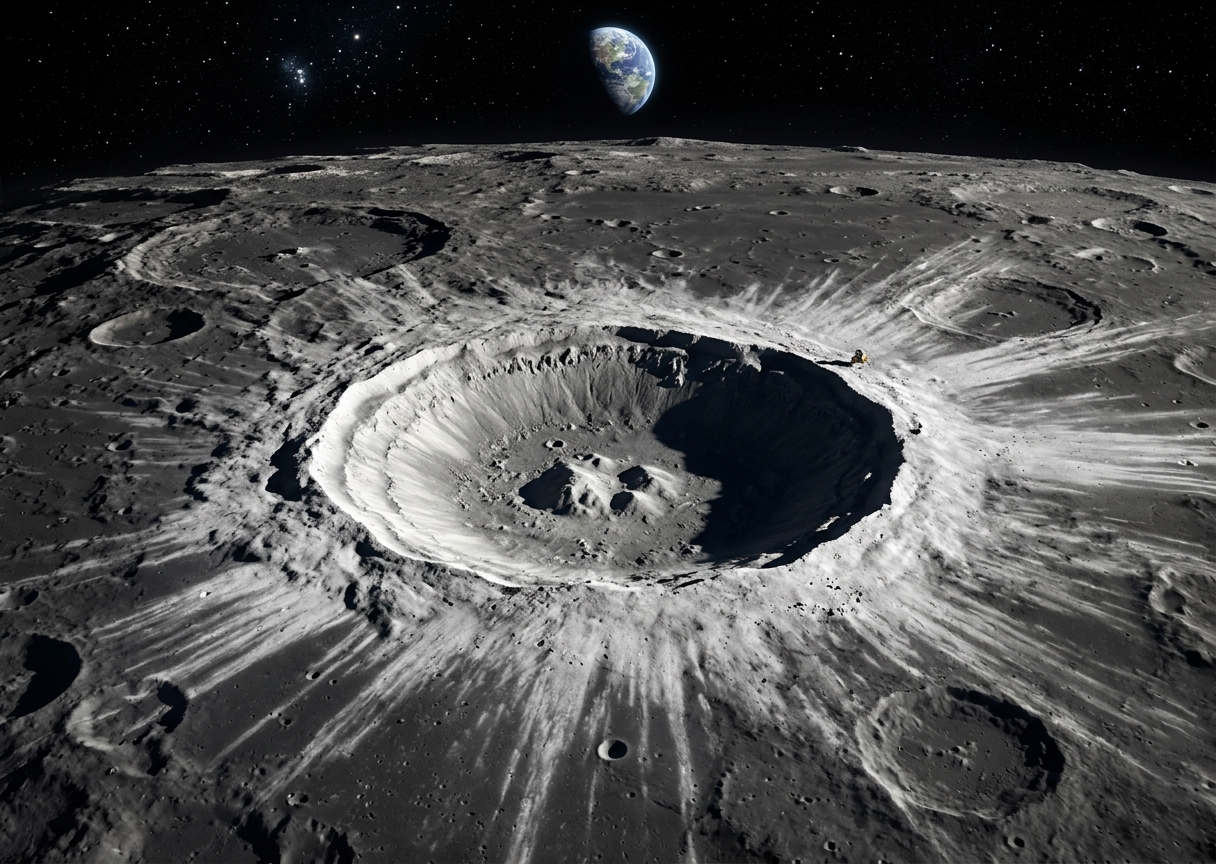
NASA Finds a Huge New Crater on the Moon

McGetchin crater formed in 2024, giving scientists a rare opportunity to examine how a major impact reshapes the lunar surface.

Scientists studying images from NASA’s Lunar Reconnaissance Orbiter have identified a newly formed lunar crater measuring approximately 222 metres across and 43 metres deep.

Named McGetchin crater, the feature formed between 11 April and 22 May 2024. Findings announced in September 2026 describe the largest crater known to have both formed and been discovered during the spacecraft’s mission at the Moon.

Researchers identified the impact site by comparing images taken at different times. Changes in brightness revealed disturbed material, prompting closer observations with LRO’s high-resolution cameras. Subsequent images allowed the team to map the crater’s shape and examine the surrounding debris.

The discovery illustrates why repeated observations matter. A spacecraft does not have to witness a collision to reveal what happened: images of the same location before and after an impact can establish when the landscape changed.

The impact’s effects extended well beyond the crater’s rim. The camera team detected surface disturbances more than 100 kilometres away, providing evidence that material from a single collision can affect distant terrain. Researchers also found signs that the debris was deposited through a more complicated sequence than a single outward-moving blanket.

Thermal measurements revealed another striking feature. LRO’s Diviner instrument detected an area roughly 6.4 kilometres wide around the crater that was approximately 9°C cooler at night than its surroundings.

Researchers attribute this temperature difference to the impact loosening the lunar soil, known as regolith. The less densely packed material retains heat less effectively, causing it to cool more rapidly overnight.

Scientists estimate that a crater of this size forms somewhere on the Moon roughly once every 130 years. That is a statistical estimate, rather than a regular timetable for impacts. The crater honours lunar scientist Thomas McGetchin, whose work helped explain how impacts distribute excavated material.

For future lunar exploration, the findings have practical implications. The camera team says long-lived equipment must be designed to withstand fast-moving particles produced by distant impacts. Studying McGetchin could help improve the models engineers use when planning protective measures for lunar infrastructure.

The crater provides a valuable natural experiment: a fresh impact site with an observable history, allowing researchers to study how the Moon’s surface changes after a major collision.

Sources:

  • NASA — Moon orbiter spots new “once-in-century” crater
  • Lunar Reconnaissance Orbiter Camera team — Spectacular McGetchin Crater
  • USRA — Discovery of a new 222-metre lunar crater

RELATED NEWS

Dakar Prepares to Host Africa’s First Olympic Sporting Event
Others

Dakar Prepares to Host Africa’s First Olympic Sporting Event

October 9, 2026

Senegal’s capital will welcome the 2026 Youth Olympic Games, marking a milestone for the continent and a new international stage...

The Kebaya’s UNESCO Recognition Celebrates a Shared Southeast Asian Heritage
Others

The Kebaya’s UNESCO Recognition Celebrates a Shared Southeast Asian Heritage

October 9, 2026

The Kebaya’s UNESCO Recognition Celebrates a Shared Southeast Asian Heritage The joint inscription by five countries honours the craftsmanship, community...

Rabat Puts Reading at the Heart of Its World Book Capital Year
Others

Rabat Puts Reading at the Heart of Its World Book Capital Year

October 9, 2026

Morocco’s capital is using its UNESCO designation to promote literacy, support publishing and bring books into more community spaces. Rabat,...

Next Post
Europe’s Right-to-Repair Rules Give Consumers More Options

Europe’s Right-to-Repair Rules Give Consumers More Options

Leave a Reply Cancel reply

Your email address will not be published. Required fields are marked *

About Global PR News

Global PR News is a newswire distributing press releases and company announcements across business, technology, science, health, and world news.

Recent Stories

  • The Global Renewable Energy Milestone
  • Global Education Reform for the AI Era

Categories

  • Business
  • Entertainment
  • Health
  • Others
  • Science
  • Technology
  • World

Follow Us

Facebook Twitter Instagram

Privacy Policy  |  © 2026 Global PR News. All rights reserved.

No Result
View All Result
  • GLOBAL PR
    • GLOBAL PR NEWSWIRE
    • GLOBAL PR NEWSROOM
    • GLOBAL PR DISTRIBUTION
    • GLOBAL PR RESOURCES
  • Business
  • Technology
  • World
  • Science
  • Entertainment
  • Health
  • Others
  • Sign In
  • Sign Up