GLOBAL PR NEWSROOM
    • GLOBAL PR NEWSWIRE
    • GLOBAL PR NEWSROOM
    • GLOBAL PR DISTRIBUTION
    • GLOBAL PR RESOURCES
  • Business
  • Technology
  • World
  • Science
  • Entertainment
  • More
    • HEALTH
    • OTHERS
    • ALL
  • No Result
    View All Result
  • Sign In
  • Sign Up
SUBMIT A STORY
GLOBAL PR NEWS NEWROOMS
    • GLOBAL PR NEWSWIRE
    • GLOBAL PR NEWSROOM
    • GLOBAL PR DISTRIBUTION
    • GLOBAL PR RESOURCES
  • Business
  • Technology
  • World
  • Science
  • Entertainment
  • More
    • HEALTH
    • OTHERS
    • ALL
  • No Result
    View All Result
  • Sign In
  • Sign Up
GLOBAL PR NEWS
No Result
View All Result
Home Others

The Billion-Meal Waste Problem Starts at Home

by Jia Bao Chng
October 9, 2026
Reading Time: 2 mins read
0
The Billion-Meal Waste Problem Starts at Home

UNEP’s findings highlight how everyday food habits contribute to a global problem—and why measuring waste is essential to reducing it.

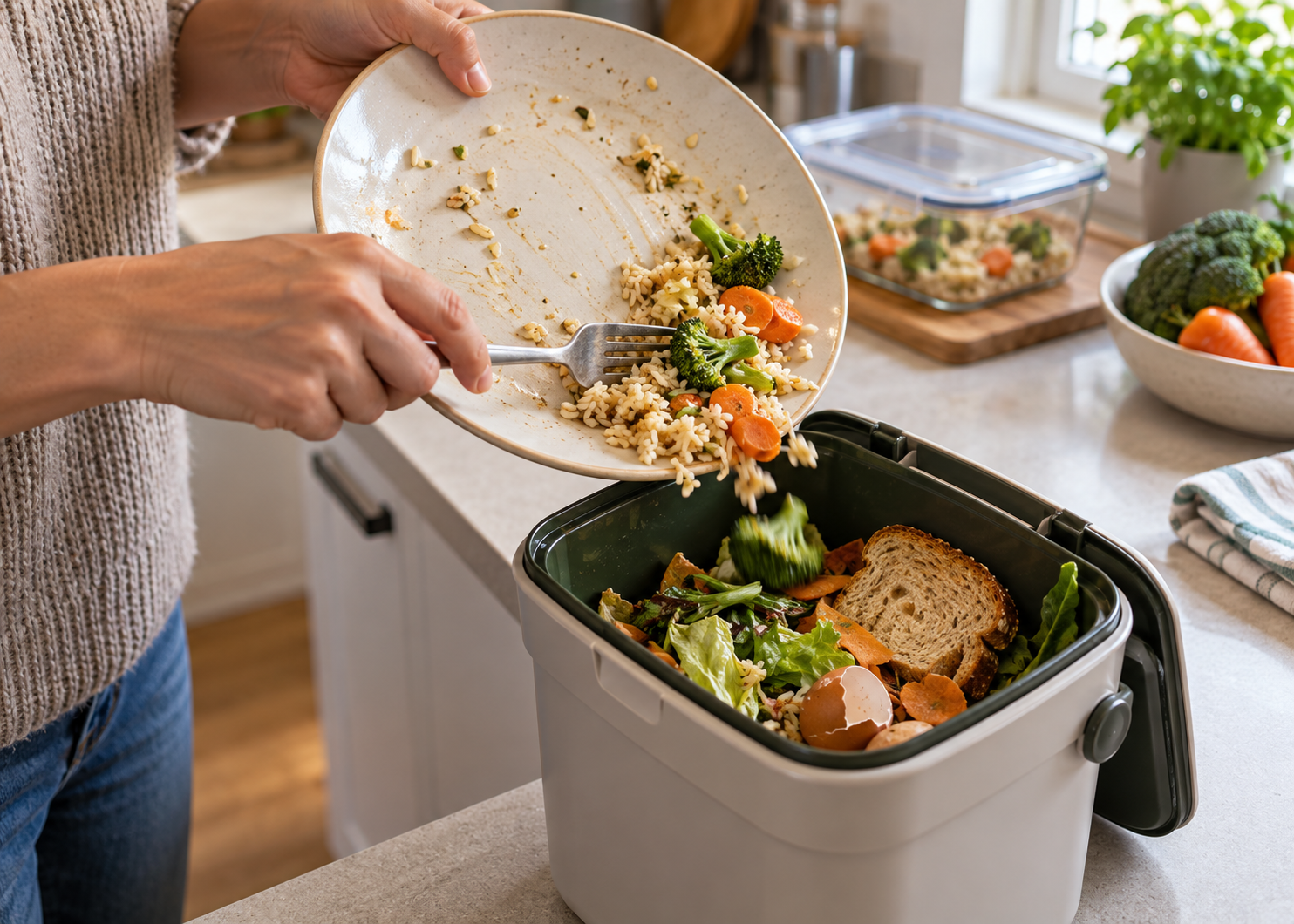
Households worldwide wasted the equivalent of more than one billion meals a day in 2022, according to the United Nations Environment Programme’s Food Waste Index Report 2024.

Published on 27 March 2024 and produced with environmental organisation WRAP, the report examines food waste across households, food-service businesses and retailers. Its findings place everyday kitchens at the centre of efforts to prevent food from being discarded.

Across those three sectors, an estimated 1.05 billion tonnes of food waste were generated in 2022. Households accounted for 60% of the total, compared with 28% from food services and 12% from retail.

The tonnage includes inedible parts, so it should not be interpreted as entirely consisting of meals that could have been eaten. Nevertheless, the household share demonstrates the importance of addressing waste after food reaches consumers.

The problem extends across income levels. UNEP found relatively small differences in average household food waste per person between high-income, upper-middle-income and lower-middle-income countries. Its findings challenge the assumption that food waste is mainly a wealthy-country issue.

Understanding the scale of waste is only a starting point. The report emphasises consistent measurement so countries can establish reliable baselines, identify where reductions are possible and track whether policies are working.

The 2024 edition expanded the available evidence and provided more detailed guidance for measuring waste in different settings. It also examined solutions, including partnerships between public authorities and businesses.

That measurement principle has a straightforward household application: noticing what repeatedly ends up in the bin. Forgotten vegetables, duplicate purchases and portions that remain uneaten reveal different problems, each requiring a different adjustment.

A household that regularly discards unused ingredients might begin by checking cupboards and the refrigerator before shopping. One that throws away cooked food could review portion sizes and plan how to use leftovers safely.

These are practical starting points rather than a complete response to a problem spanning homes, restaurants and shops. The report’s focus on coordinated action recognises that reducing waste requires changes across the food system.

For households, the first useful question is concrete: which food gets discarded most often, and what would prevent that waste on the next shopping trip?

Sources:

  • UNEP — World squanders over one billion meals a day
  • UNEP — Food Waste Index Report 2024

RELATED NEWS

Dakar Prepares to Host Africa’s First Olympic Sporting Event
Others

Dakar Prepares to Host Africa’s First Olympic Sporting Event

October 9, 2026

Senegal’s capital will welcome the 2026 Youth Olympic Games, marking a milestone for the continent and a new international stage...

The Kebaya’s UNESCO Recognition Celebrates a Shared Southeast Asian Heritage
Others

The Kebaya’s UNESCO Recognition Celebrates a Shared Southeast Asian Heritage

October 9, 2026

The Kebaya’s UNESCO Recognition Celebrates a Shared Southeast Asian Heritage The joint inscription by five countries honours the craftsmanship, community...

Rabat Puts Reading at the Heart of Its World Book Capital Year
Others

Rabat Puts Reading at the Heart of Its World Book Capital Year

October 9, 2026

Morocco’s capital is using its UNESCO designation to promote literacy, support publishing and bring books into more community spaces. Rabat,...

Next Post
Squash and Flag Football Prepare for Their Olympic Debuts

Squash and Flag Football Prepare for Their Olympic Debuts

Leave a Reply Cancel reply

Your email address will not be published. Required fields are marked *

About Global PR News

Global PR News is a newswire distributing press releases and company announcements across business, technology, science, health, and world news.

Recent Stories

  • The Global Renewable Energy Milestone
  • Global Education Reform for the AI Era

Categories

  • Business
  • Entertainment
  • Health
  • Others
  • Science
  • Technology
  • World

Follow Us

Facebook Twitter Instagram

Privacy Policy  |  © 2026 Global PR News. All rights reserved.

No Result
View All Result
  • GLOBAL PR
    • GLOBAL PR NEWSWIRE
    • GLOBAL PR NEWSROOM
    • GLOBAL PR DISTRIBUTION
    • GLOBAL PR RESOURCES
  • Business
  • Technology
  • World
  • Science
  • Entertainment
  • Health
  • Others
  • Sign In
  • Sign Up