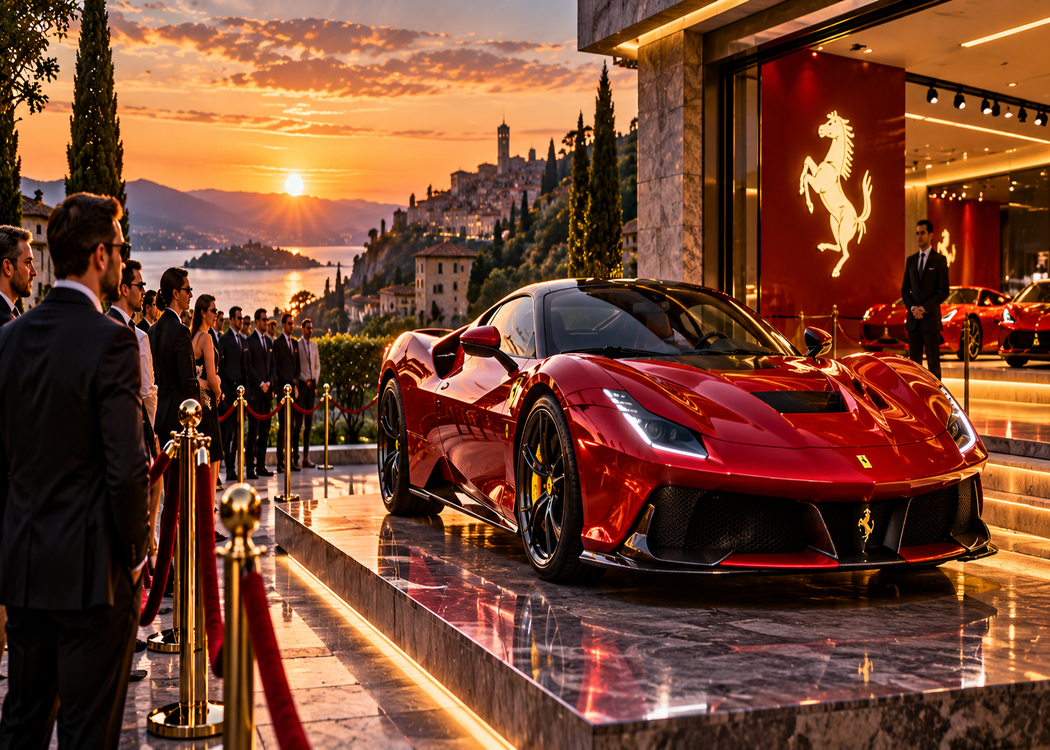
Controlled supply, an extensive order book and lucrative customization help the Italian carmaker sustain exceptional profitability.
Ferrari’s latest results illustrate the financial strength of keeping a coveted product scarce. The Italian luxury sports-car maker reported an operating profit margin of 31.2% in the second quarter of 2026, generating €605 million in operating profit on €1.94 billion in revenue. Its order book covered all of 2027, according to the company’s July results announcement.
Those figures build on a strong previous year. Ferrari achieved a 29.5% operating margin in 2025, when chief executive Benedetto Vigna attributed its performance to carefully managed volumes, its product mix, personalization and sponsorships. The strategy emphasizes increasing the value of its business while preserving exclusivity.
The latest quarter offers a striking example. Ferrari shipped 3,366 vehicles, compared with 3,494 a year earlier, yet revenue increased 8% and operating profit rose 10%. The company linked lower deliveries to its planned model changeover, while a richer product mix and greater customization supported earnings. Fewer deliveries, in this instance, were compatible with a more profitable business.
This approach invites comparison with Veblen goods: luxury products whose high prices can themselves increase their desirability by signaling status. For buyers, ownership can convey access to something that remains beyond the reach of most consumers.
However, scarcity and Veblen demand are distinct ideas. A restricted supply can support pricing without demonstrating that raising prices actually increases demand. Ferrari’s margins and order book provide evidence of commercial strength; they do not, by themselves, establish a textbook Veblen effect.
The economic logic of its strategy is nevertheless clear. Limiting availability can help preserve the sense of privilege associated with ownership. Customization gives customers additional ways to distinguish their cars, while allowing Ferrari to generate more revenue from individual purchases. The company identified stronger personalization demand as a reason for raising its 2026 financial guidance.
That combination can function as a competitive moat—a durable advantage that rivals struggle to reproduce. Building another expensive sports car is possible; reproducing an established brand’s desirability and customers’ willingness to wait is considerably harder. Ferrari’s annual report explicitly identifies its aura of exclusivity as important to maintaining premium pricing.
The argument requires limits. An order book extending through 2027 does not mean every buyer faces the same waiting period. Nor does restricted production guarantee that every Ferrari will retain its purchase price. Describing scarcity as support for resale values is more defensible than presenting it as protection against depreciation.
Ferrari’s challenge is to keep growth compatible with the exclusivity that makes its products desirable. Its recent results suggest that higher-value models and personalized purchases can support that balance, allowing substantial earnings growth without a corresponding increase in the number of cars delivered.
Sources: