An experimental drug has produced promising results in animal models of multiple sclerosis, raising the possibility that future MS treatments could do more than simply slow additional neurological damage.
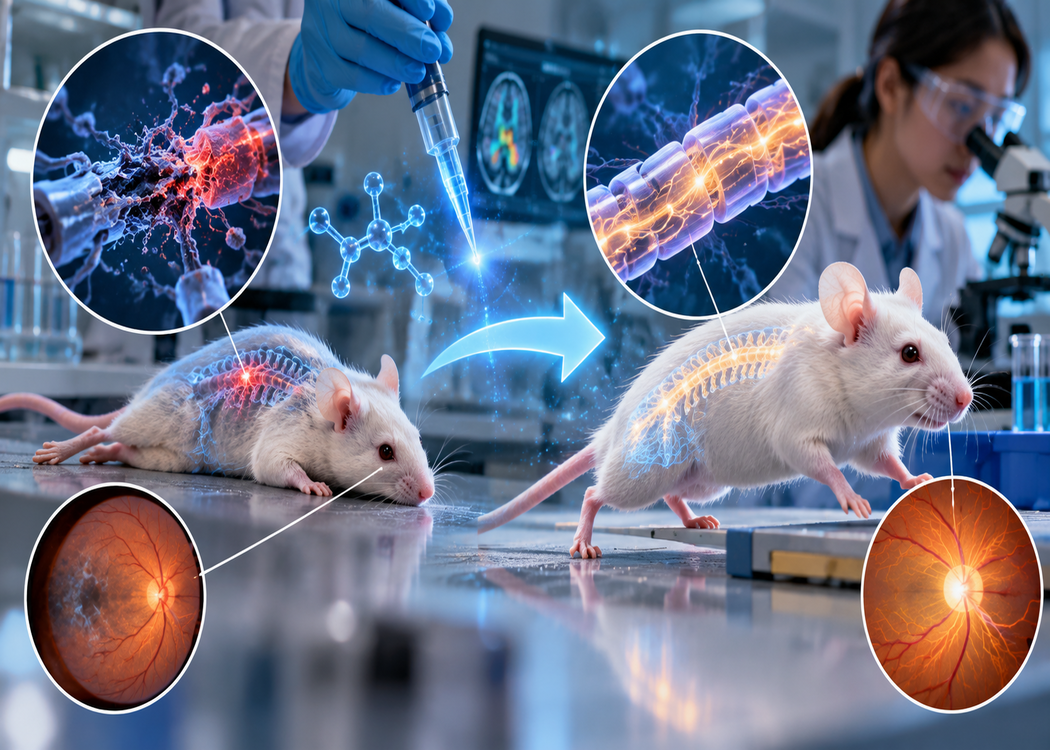
The experimental treatment, known as kamuvudine-9 or K-9, was studied in laboratory models that developed symptoms resembling important aspects of multiple sclerosis.
MS occurs when the immune system mistakenly attacks structures within the central nervous system. Damage to myelin—the protective material surrounding nerve fibers—can interfere with communication between the brain and the rest of the body. Patients may experience weakness, difficulty walking, vision problems, numbness and other neurological symptoms.
In the NIH-funded research, K-9 helped reverse pre-existing paralysis and vision loss in animal models.
Researchers believe part of the effect may involve preventing activation of an inflammatory form of cell death that contributes to damage in the brain and spinal cord.
The distinction between preventing damage and restoring function is important. Many existing MS treatments are designed primarily to reduce inflammatory attacks and slow disease progression. They cannot necessarily repair neurological function that has already been lost.
A therapy capable of promoting meaningful recovery would therefore represent a different treatment objective.
However, these results remain preclinical. An animal recovering neurological function after experimental treatment does not guarantee that people with MS will experience the same outcome.
Additional research will be necessary to establish whether the mechanism works safely in humans and whether neurological improvements can be reproduced in clinical trials.