GLOBAL PR NEWSROOM
    • GLOBAL PR NEWSWIRE
    • GLOBAL PR NEWSROOM
    • GLOBAL PR DISTRIBUTION
    • GLOBAL PR RESOURCES
  • Business
  • Technology
  • World
  • Science
  • Entertainment
  • More
    • HEALTH
    • OTHERS
    • ALL
  • No Result
    View All Result
  • Sign In
  • Sign Up
SUBMIT A STORY
GLOBAL PR NEWS NEWROOMS
    • GLOBAL PR NEWSWIRE
    • GLOBAL PR NEWSROOM
    • GLOBAL PR DISTRIBUTION
    • GLOBAL PR RESOURCES
  • Business
  • Technology
  • World
  • Science
  • Entertainment
  • More
    • HEALTH
    • OTHERS
    • ALL
  • No Result
    View All Result
  • Sign In
  • Sign Up
GLOBAL PR NEWS
No Result
View All Result
Home Health

Human Organoids Could Reduce Medicine’s Dependence on Animal Testing

by Jia Bao Chng
October 1, 2026
Reading Time: 2 mins read
0
Human Organoids Could Reduce Medicine’s Dependence on Animal Testing

Biomedical research has relied heavily on laboratory animals for decades, but scientists are developing increasingly sophisticated alternatives based directly on human biology.

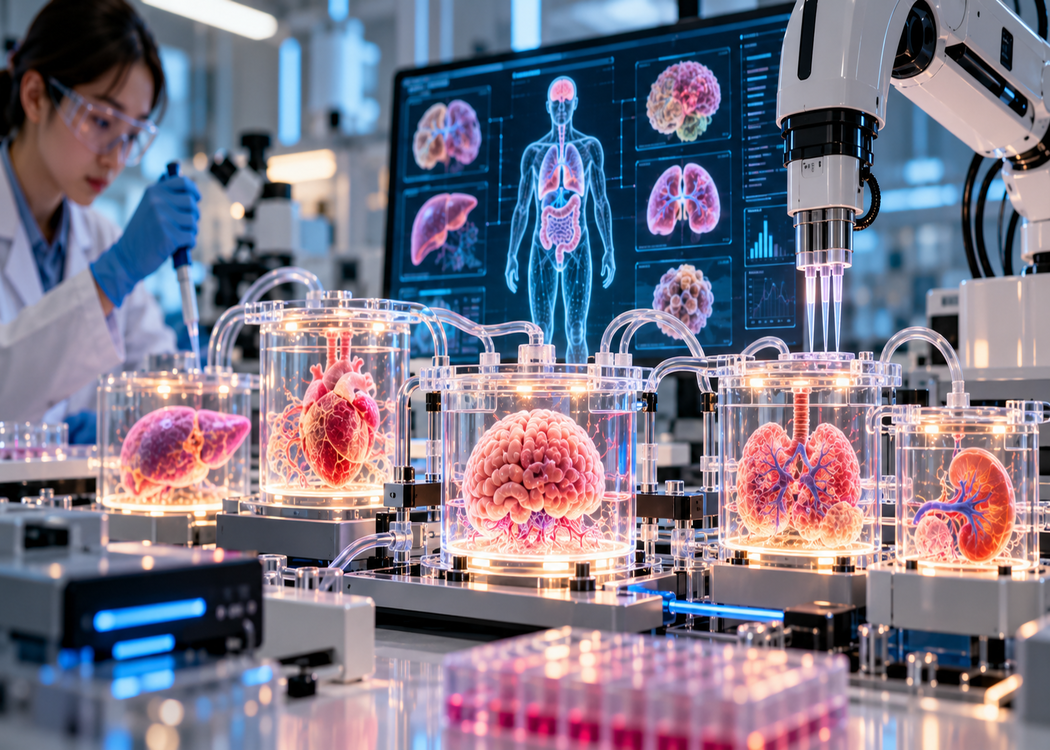
NIH announced major investments exceeding $88 million to expand infrastructure for human-based experimental models. One planned research facility will combine standardized human organoids with robotics, artificial intelligence and advanced data technology.

Organoids are miniature three-dimensional structures grown from cells under carefully controlled laboratory conditions. They are designed to reproduce some important characteristics of real human organs.

Researchers can now develop organoid models resembling aspects of the brain, intestine, liver, kidney, lungs and other tissues.

These models are not complete miniature humans, nor are they perfect replicas of full organs. However, they can provide researchers with an experimental environment containing human cells and tissue structures.

This is important because animals and humans do not always respond to diseases or medicines in identical ways. A treatment that works successfully in mice, for example, may later fail during human clinical trials.

Better human-based experimental systems could allow researchers to identify some of these differences earlier.

Animal research will not disappear immediately. Whole organisms remain necessary for answering many questions involving complex interactions among organs, immune systems and behaviour.

Instead, organoids and organ-on-chip technologies could reduce the number of animal experiments required while improving the biological relevance of some studies.

Combined with AI and laboratory automation, these technologies could eventually allow thousands of highly controlled experiments to be performed on human-derived biological models.


RELATED NEWS

A Sugar Found in Red Meat Is Linked to Higher Type 2 Diabetes Risk
Health

A Sugar Found in Red Meat Is Linked to Higher Type 2 Diabetes Risk

October 9, 2026

A large French study found an association involving meat-derived Neu5Gc, but could not establish that the compound itself causes diabetes....

Just 10 Minutes of Slow Jogging May Improve Mood and Focus
Health

Just 10 Minutes of Slow Jogging May Improve Mood and Focus

October 9, 2026

A small Japanese study found that a brief, gentle treadmill run improved mood and performance on an attention task. Ten...

A Gut-Bacterial Compound Is Linked to Alzheimer’s Risk
Health

A Gut-Bacterial Compound Is Linked to Alzheimer’s Risk

October 9, 2026

A study combining human observations with laboratory experiments identifies a possible connection between gut microbes and Alzheimer’s-related brain changes. A...

Next Post
Scientists Are Building Autonomous AI Laboratories for Drug Discovery

Scientists Are Building Autonomous AI Laboratories for Drug Discovery

Leave a Reply Cancel reply

Your email address will not be published. Required fields are marked *

About Global PR News

Global PR News is a newswire distributing press releases and company announcements across business, technology, science, health, and world news.

Recent Stories

  • The Global Renewable Energy Milestone
  • Global Education Reform for the AI Era

Categories

  • Business
  • Entertainment
  • Health
  • Others
  • Science
  • Technology
  • World

Follow Us

Facebook Twitter Instagram

Privacy Policy  |  © 2026 Global PR News. All rights reserved.

No Result
View All Result
  • GLOBAL PR
    • GLOBAL PR NEWSWIRE
    • GLOBAL PR NEWSROOM
    • GLOBAL PR DISTRIBUTION
    • GLOBAL PR RESOURCES
  • Business
  • Technology
  • World
  • Science
  • Entertainment
  • Health
  • Others
  • Sign In
  • Sign Up