GLOBAL PR NEWSROOM
    • GLOBAL PR NEWSWIRE
    • GLOBAL PR NEWSROOM
    • GLOBAL PR DISTRIBUTION
    • GLOBAL PR RESOURCES
  • Business
  • Technology
  • World
  • Science
  • Entertainment
  • More
    • HEALTH
    • OTHERS
    • ALL
  • No Result
    View All Result
  • Sign In
  • Sign Up
SUBMIT A STORY
GLOBAL PR NEWS NEWROOMS
    • GLOBAL PR NEWSWIRE
    • GLOBAL PR NEWSROOM
    • GLOBAL PR DISTRIBUTION
    • GLOBAL PR RESOURCES
  • Business
  • Technology
  • World
  • Science
  • Entertainment
  • More
    • HEALTH
    • OTHERS
    • ALL
  • No Result
    View All Result
  • Sign In
  • Sign Up
GLOBAL PR NEWS
No Result
View All Result
Home Technology

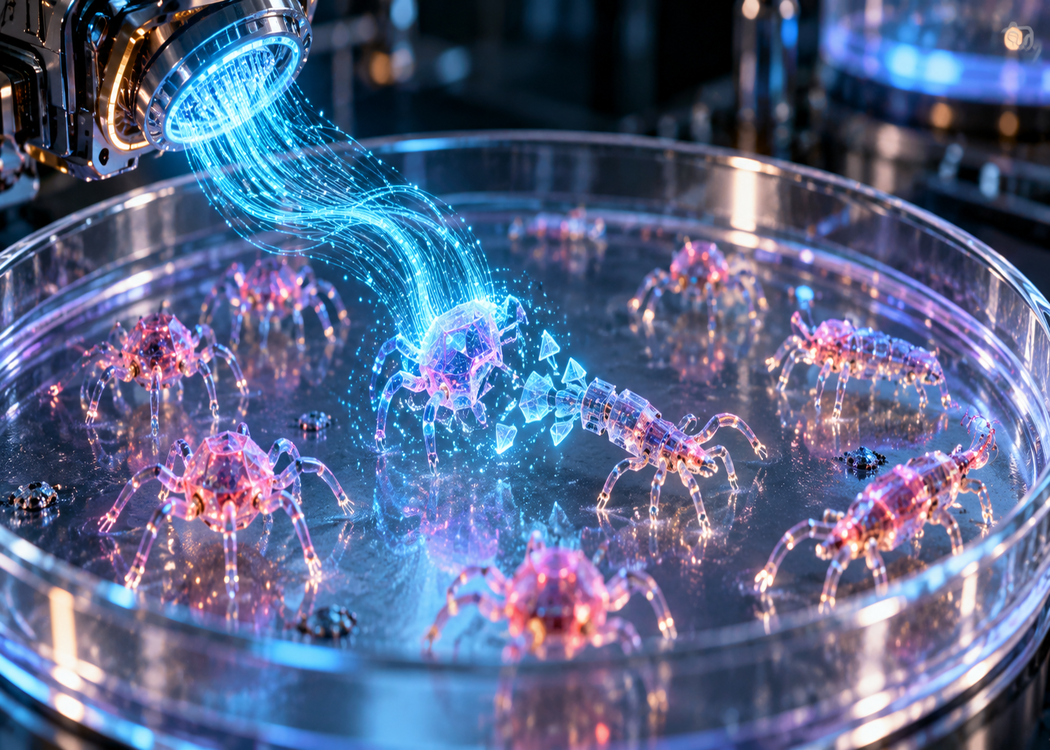
Scientists Create Living Robots from Frog Cells, Opening a New Frontier in Biological Engineering

by Jia Bao Chng
October 12, 2026
Reading Time: 2 mins read
0
Scientists Create Living Robots from Frog Cells, Opening a New Frontier in Biological Engineering

Researchers from Tufts University and the University of Vermont introduced an unusual technological achievement in 2020: tiny biological constructs assembled from living frog cells that could move and perform simple tasks. Known as xenobots, these millimeter-scale structures challenged the traditional distinction between living organisms and engineered machines. Unlike conventional robots built from metals, plastic and electronic components, xenobots were constructed from biological tissue, allowing them to move using the natural capabilities of living cells.

The researchers used cells derived from the African clawed frog, Xenopus laevis, and assembled them into carefully designed configurations. Computational methods helped identify body shapes capable of producing specific movement patterns, while laboratory techniques allowed researchers to build the resulting structures. Some xenobots could move through liquid environments, push small particles and recover from certain physical injuries. Their behavior emerged from the organization and interaction of living cells rather than from electronic processors or conventional programming instructions.

The research also raised important questions about the relationship between biological development and engineering. Cells normally cooperate to build tissues and organs according to complex developmental processes. Xenobots demonstrated that when cells are rearranged into unfamiliar configurations, they can collectively produce behaviors not normally associated with their original biological role. Later experiments explored additional forms of collective behavior, including the ability of certain xenobot configurations to gather loose cells into new structures under controlled laboratory conditions.

Potential future applications include studying tissue repair, biological self-organization and the design of biodegradable microscopic systems. Researchers have also discussed possible uses in environmental monitoring and targeted biomedical technologies, although these remain speculative. Xenobots are not miniature intelligent creatures capable of independently performing complex missions, nor are they controlled by continuous digital commands in the manner of ordinary robots. Nevertheless, they represent an important early demonstration of how living cells can become building blocks for engineered biological systems.

Sources:

  • Proceedings of the National Academy of Sciences (PNAS), Tufts University, and University of Vermont.

RELATED NEWS

AI-Powered Digital Noses Could Detect Disease Through a Single Breath
Technology

AI-Powered Digital Noses Could Detect Disease Through a Single Breath

October 12, 2026

Scientists are investigating a new approach to medical screening that could make certain diagnostic tests faster, less invasive and easier...

Technology

Stretchable, Washable Batteries Could Transform Wearable Technology

October 12, 2026

Researchers at the University of British Columbia (UBC) have developed an experimental battery designed to remain functional even when stretched,...

James Webb Reveals Galaxies from the Universe’s Earliest Days
Technology

James Webb Reveals Galaxies from the Universe’s Earliest Days

October 12, 2026

The James Webb Space Telescope is transforming humanity's understanding of the early universe by detecting galaxies that existed only a...

Next Post
IBM’s 1,121-Qubit Condor Processor Marks a Major Milestone in Quantum Computing

IBM's 1,121-Qubit Condor Processor Marks a Major Milestone in Quantum Computing

Leave a Reply Cancel reply

Your email address will not be published. Required fields are marked *

About Global PR News

Global PR News is a newswire distributing press releases and company announcements across business, technology, science, health, and world news.

Recent Stories

  • The Global Renewable Energy Milestone
  • Global Education Reform for the AI Era

Categories

  • Business
  • Entertainment
  • Health
  • Others
  • Science
  • Technology
  • World

Follow Us

Facebook Twitter Instagram

Privacy Policy  |  © 2026 Global PR News. All rights reserved.

No Result
View All Result
  • GLOBAL PR
    • GLOBAL PR NEWSWIRE
    • GLOBAL PR NEWSROOM
    • GLOBAL PR DISTRIBUTION
    • GLOBAL PR RESOURCES
  • Business
  • Technology
  • World
  • Science
  • Entertainment
  • Health
  • Others
  • Sign In
  • Sign Up