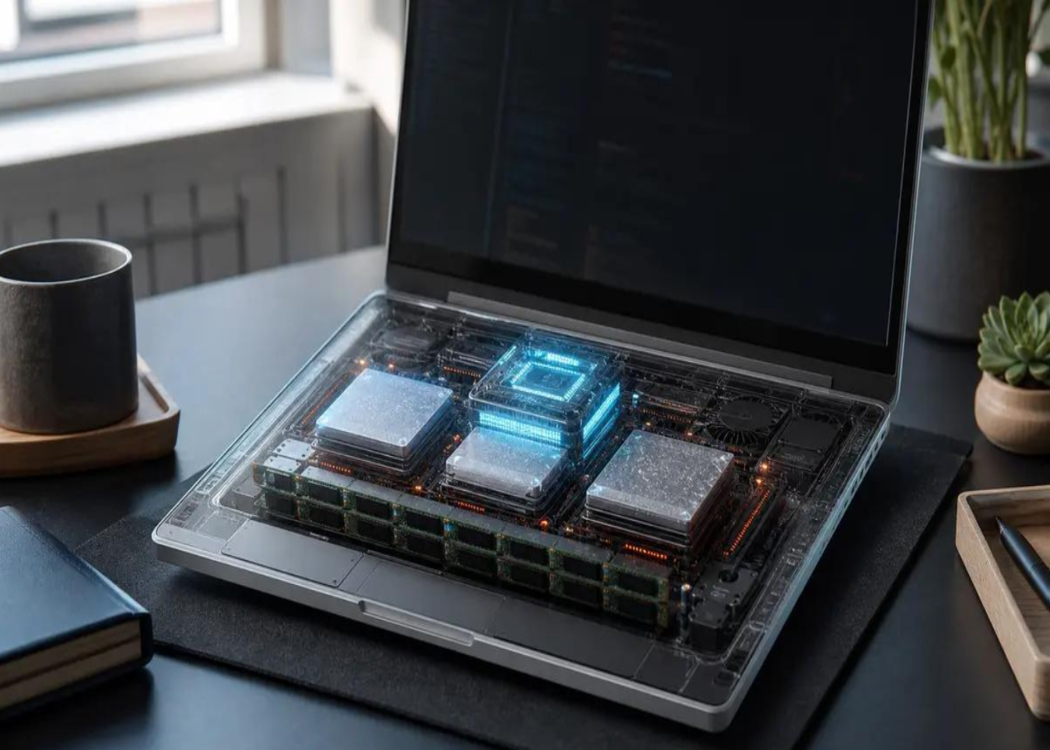
Microsoft is pushing personal computing toward a future in which artificial intelligence can operate directly on laptops instead of relying entirely on remote cloud servers. The company’s growing focus on AI-capable Windows devices reflects a fundamental change in how computers are designed, with specialized neural processing units (NPUs), powerful graphics processors and optimized software enabling more AI tasks to run locally. This approach could make everyday computing faster, more responsive and less dependent on constant internet connectivity.
One of the biggest advantages of local AI processing is the potential to improve privacy and reduce latency. Traditional cloud-based AI applications transmit information to remote servers for processing, which may introduce delays and raise concerns when users work with confidential documents or sensitive business information. On-device AI can process certain requests without transmitting the underlying data externally, making it particularly attractive for organizations with strict security requirements. However, the actual privacy benefits depend on each application’s architecture, permissions and data-handling practices.
Microsoft is also exploring how AI agents can interact with Windows applications and perform increasingly complex tasks on behalf of users. These agents could eventually help organize files, automate repetitive workflows, assist with programming and coordinate activities across multiple applications. Giving software agents greater autonomy introduces new security challenges, particularly when they can access personal files or execute actions. Permission boundaries, sandboxing and user approval mechanisms will therefore become increasingly important.
The broader significance extends beyond individual laptop specifications. As AI becomes a standard part of operating systems, consumers may begin evaluating computers according to their ability to run useful AI applications efficiently, securely and reliably. Battery life, processing performance and memory capacity will remain important, but dedicated AI performance could become another major purchasing consideration. The next generation of personal computers may be defined as much by their intelligence as by their hardware.
Sources: