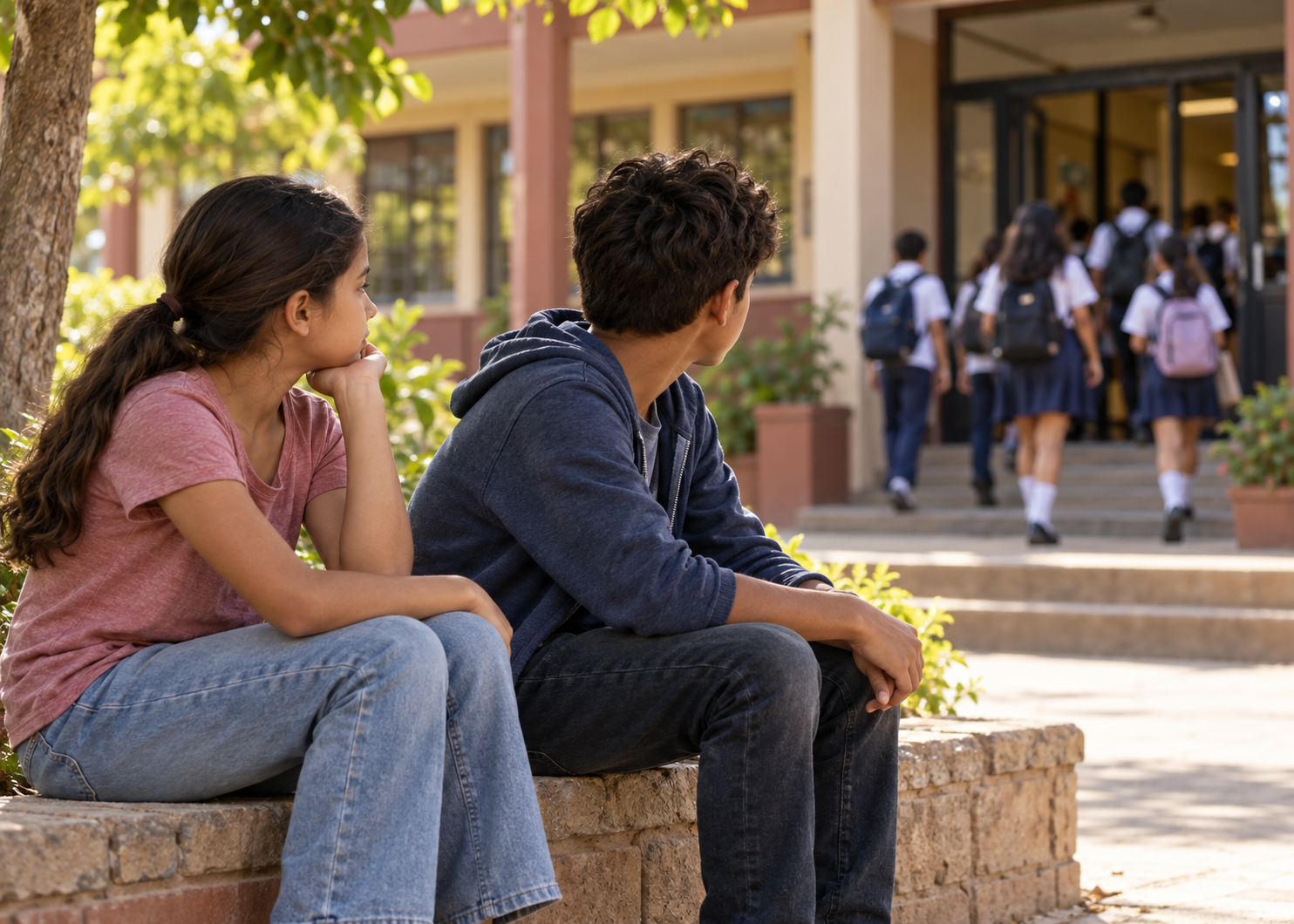
Global enrolment has expanded, but population growth, conflict and financial pressures continue to leave millions without access to education.
An estimated 273 million children, adolescents and young people were out of school in 2024, according to UNESCO’s 2026 Global Education Monitoring Report.
Released on 25 March 2026, the report found that the number had risen for seven consecutive years. Population growth, crises and shrinking budgets have contributed to the challenge, leaving approximately one in six school-age children and young people worldwide excluded from education.
The findings reveal a widening gap between expanding education systems and the number of learners they still need to reach.
Global primary and secondary enrolment reached approximately 1.4 billion students in 2024, an increase of 327 million, or 30%, since 2000. Yet the out-of-school population also increased in recent years, showing that higher enrolment alone does not guarantee universal access.
Both trends can occur simultaneously when the school-age population grows and opportunities remain uneven. More classroom places may be available, while substantial numbers of children still face barriers to attending.
Conflict adds another layer of uncertainty. UNESCO estimates that gaps in data from the 10 countries most affected by conflict could leave at least 13 million additional children and young people missing from the headline out-of-school count.
The report also documents progress in completing education. Since 2000, global completion rates have increased from 77% to 88% for primary education, from 60% to 78% for lower secondary and from 37% to 61% for upper secondary education.
Those improvements show that sustained progress is possible. UNESCO highlights countries including Morocco and Viet Nam, which have reduced adolescent out-of-school rates by at least 80% since 2000.
However, removing school fees does not eliminate every cost families face. Transport, meals and after-school care can remain significant obstacles. UNESCO also warns that programmes dependent on external funding may become vulnerable when donor support falls.
The report calls for coordinated policies that reflect local circumstances, bringing together support for families, stronger education systems and measures that reach disadvantaged learners.
For governments, the challenge is to turn growing enrolment into lasting participation: helping children enter school, remain in education and complete their studies.
Sources: